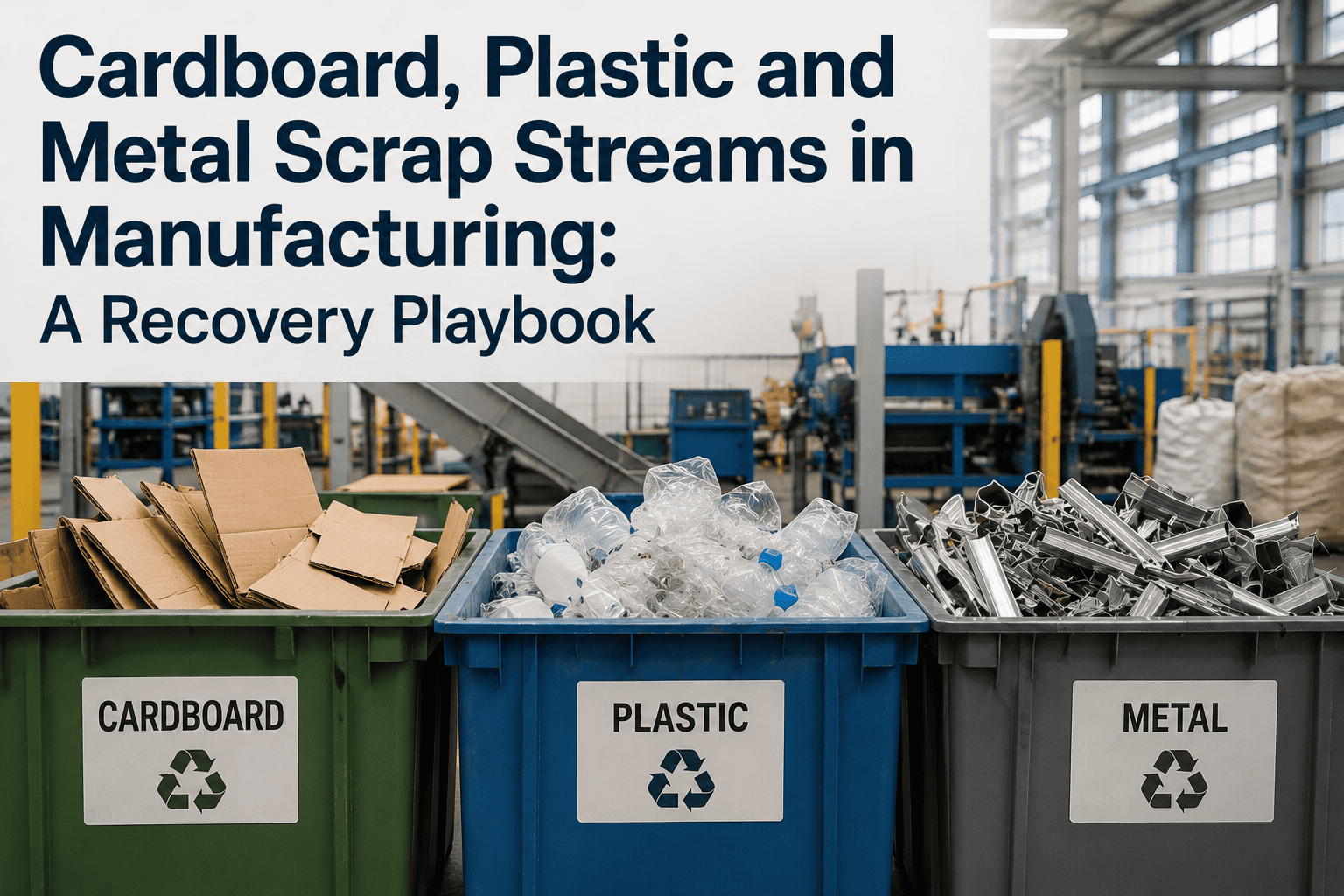
Every plant already generates three separate scrap streams — cardboard, plastic, and metal — and most treat all three the same way: into whichever skip is closest. Each stream has genuinely different economics. Baled, uncontaminated cardboard sells. Mixed-grade plastic barely covers collection cost. Segregated metal by alloy is worth multiples of what the same metal fetches mixed. The gap between a plant that segregates properly and one that doesn't is real revenue, not just tidiness.
Track Every Scrap Stream By Weight, Grade, and Value
Cardboard, plastic, and metal logged separately at the source, so recovery value stops leaking into a mixed skip.
Three Streams, Three Different Economics
Treating cardboard, plastic, and metal as one undifferentiated "waste" line hides the fact that each behaves completely differently once it leaves the plant.
| Stream | What Drives Its Value | Main Contamination Risk |
|---|---|---|
| Cardboard | Clean baling, dryness, absence of food residue | Wet or greasy card downgrading a whole bale |
| Plastic | Single-grade separation by polymer type | Mixed grades collapsing value to near-zero |
| Metal | Segregation by alloy and cleanliness | Mixed alloys sold at the lowest common grade |
Where Value Leaks Out Of Each Stream
Cardboard Contamination
A single wet or food-contaminated load can downgrade an entire bale, turning a saleable stream into a disposal cost.
Plastic Grade Mixing
Different polymer types thrown into one bin collapse to the lowest-value grade, even when most of it was high-grade material.
Metal Alloy Mixing
Mixed alloys are priced at the lowest grade present, so one contaminated batch can drag down an otherwise clean load.
The Single Mixed Skip
Combining all three streams into one skip is the single fastest way to turn three sellable materials into one disposal fee.
The 2026 Regulatory Backdrop
UK packaging producers are now operating under Extended Producer Responsibility, which places the cost of managing packaging waste directly on the businesses that place it on the market rather than local authorities. Large producers — turnover above £2 million and more than 50 tonnes of packaging a year — carry the fullest reporting and fee obligations, with base fees currently set per tonne by material type and shifting toward a recyclability-based rating from the 2026-27 scheme year onward.
From Mixed Skip To Revenue Stream
Segregate At Source
Cardboard, plastic, and metal are separated where they're generated, before contamination has a chance to happen.
Weigh & Log By Stream
Each stream is weighed and recorded separately, giving a real picture of volume and value instead of one waste total.
Match To Accredited Reprocessors
Each material is routed to the reprocessor paying for that specific grade, rather than whoever collects everything.
Track The Evidence
PRN and PERN documentation is kept against each load, supporting both revenue reconciliation and compliance reporting.
Stop Losing Recovery Value To A Mixed Skip
Segregated tracking by stream, weight, and grade — with PRN and PERN evidence tied to every load leaving site.
How OxMaint Supports Scrap Stream Recovery
Stream-Level Logging
Cardboard, plastic, and metal are weighed and recorded as separate streams, not one combined waste figure.
Contamination Flagging
Cross-stream mixing is flagged at the point of collection, before it downgrades an otherwise clean load.
Revenue Reconciliation
Weight logged on-site is matched against reprocessor payments, surfacing gaps between expected and actual value.
PRN/PERN Documentation
Recycling evidence is stored against each load, ready for compliance reporting and audit review.
A mixed skip is the fastest way to turn three sellable materials into one disposal invoice. Sign up free to see your cardboard, plastic, and metal streams tracked separately, from source to reprocessor.
Frequently Asked Questions
Why does mixing plastic grades destroy so much value?
Reprocessors price mixed loads at the value of the lowest-grade polymer present, so a small amount of contamination can drag an entire load's price down even though most of it was high-grade material.
What are PRNs and PERNs, and do they still matter in 2026?
PRNs and PERNs are certificates confirming a tonne of packaging waste has been recycled domestically or exported for recycling; they remain part of the compliance evidence system in 2026 even as the wider Extended Producer Responsibility fee model is phased in alongside them.
Who counts as an obligated producer under UK packaging EPR?
Broadly, large producers are businesses with turnover above £2 million that handle more than 50 tonnes of packaging a year, with separate thresholds applying to smaller producers.
Does segregating metal by alloy really change its resale value?
Yes — clean, single-alloy metal consistently commands a higher price than mixed loads, since reprocessors have to sort or downgrade contaminated material before it can be resold.
How can a plant start improving scrap stream value quickly?
Segregating at the point of generation rather than at a central skip is usually the single highest-impact change, since most contamination happens in the seconds before material is thrown away, not afterward.
Turn Three Scrap Streams Into Real Recovery Revenue
Segregated tracking, contamination flagging, and PRN/PERN evidence for cardboard, plastic, and metal streams.