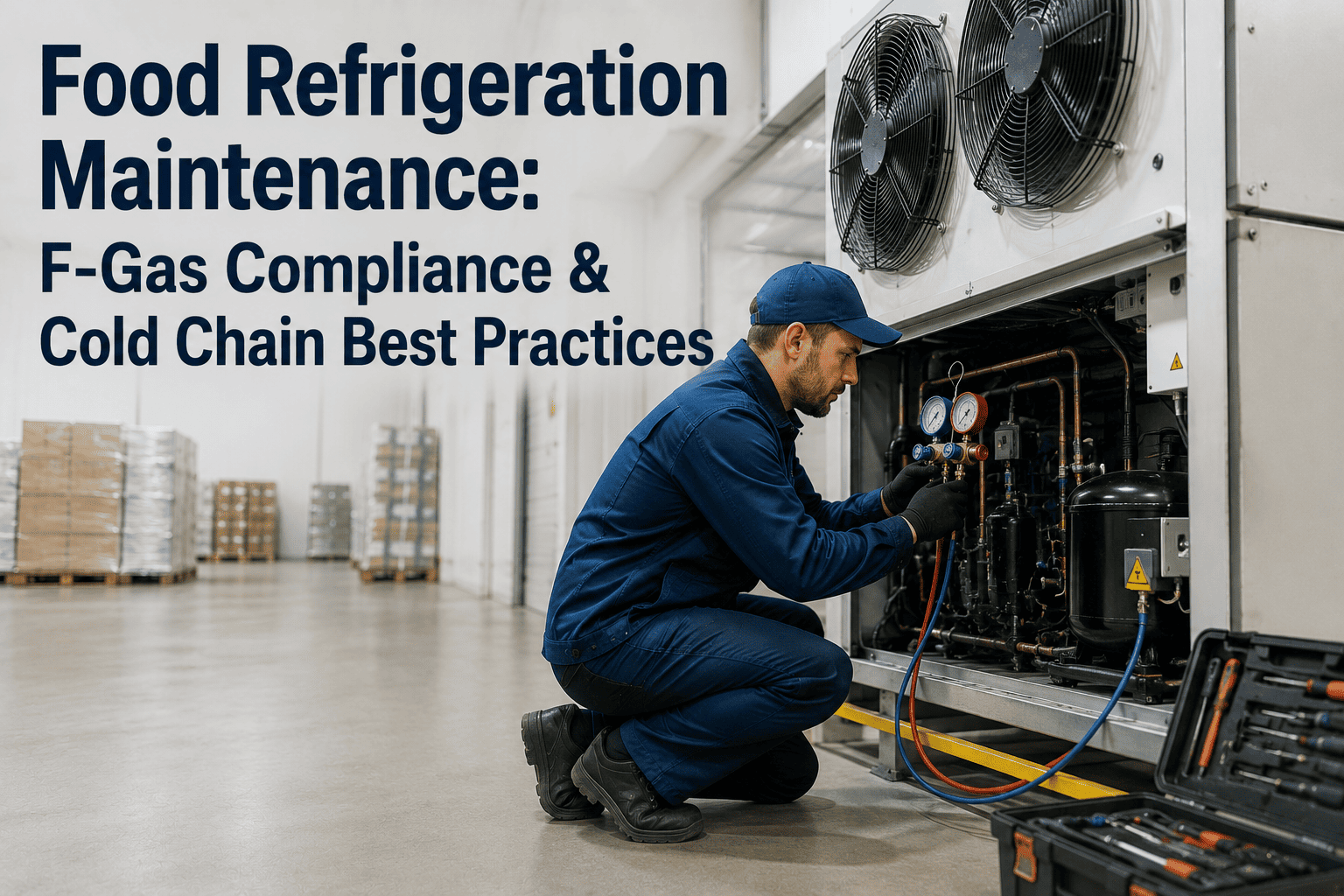
Food production doesn't pause for a compressor fault. A single degree of temperature drift in a blast freezer or a slow refrigerant leak in a cold store can turn a full day's output into waste before anyone notices. UK food manufacturers run on tight cold chains and tighter F-Gas rules, yet many still track refrigerant charge, leak checks and service history across paper logbooks and separate contractor records. A CMMS like OxMaint puts every refrigeration asset, leak check and F-Gas record into one place your compliance team can actually see.
Keep Every Compressor and Cold Store Compliant
Track refrigerant charge, leak checks and F-Gas logbooks for every unit on site from a single maintenance system.
F-Gas Compliance: What Food Manufacturers Are Actually Required to Do
The F-Gas Regulation ties leak check frequency to the CO2 equivalent of the refrigerant charge in each system, not just its weight. A small HFC unit and a large ammonia plant can sit under completely different check schedules, and getting that wrong is one of the most common compliance gaps on food sites.
| Refrigerant Type | F-Gas Status | Typical Leak Check Trigger |
|---|---|---|
| HFC (R404A, R134a) | Fully regulated F-Gas | 5+ tonnes CO2e requires periodic checks |
| Ammonia (NH3) | Not an F-Gas | Checked under safety and process regulations instead |
| CO2 (R744) | Not an F-Gas | Monitored for pressure and containment, not F-Gas rules |
| HFO blends | Low-GWP F-Gas | Lower CO2e often reduces check frequency |
Four Refrigeration Zones That Need Different Maintenance Rules
Cold Storage Rooms
Door seals and evaporator coils need frequent checks since these rooms cycle open and shut all shift long.
Blast Freezers & Chillers
Rapid temperature swings put extra strain on compressors, so these units wear faster than standard storage.
Retail Display Cabinets
Smaller refrigerant charges but constant customer footfall make gasket and fan faults easy to miss.
Compressor Plant Rooms
The largest refrigerant charge on site sits here, making it the priority zone for leak detection.
Building a Cold Chain Maintenance Workflow That Scales
Log Every Refrigeration Asset
Record refrigerant type and charge for every unit so F-Gas categories are correct from day one.
Automate Leak Check Schedules
Set check intervals against each unit's CO2 equivalent so nothing depends on a contractor's memory.
Centralise Temperature Alerts
Route sensor alerts and reactive faults to one maintenance queue instead of scattered phone calls.
Report for F-Gas Audits
Pull logbook history and leak records instantly when an auditor or REFCOM inspection asks for them.
Cold Chain Maintenance Maturity
Paper Logbooks and Guesswork
Refrigerant records sit in a filing cabinet and leak checks happen whenever a contractor is free.
Site-by-Site Tracking
Each facility keeps its own spreadsheet with no shared view of total refrigerant charge across the business.
One Connected System
Every unit, leak check and logbook entry sits in a single platform ready for audit at any moment.
Why Undetected Leaks Are the Real Risk
A refrigerant leak rarely announces itself. Product spoils, energy bills creep up and a unit runs harder to hit the same setpoint, long before anyone traces it back to a slow leak in a plant room. The sites that stay ahead of F-Gas obligations aren't running more inspections, they're running the right inspections at the right time against a live asset register. Sign up free to bring your cold chain into one system, or book a demo to see how food manufacturers track refrigeration compliance in practice.
Stop Leaks Before They Cost You Product
Track refrigerant charge, leak checks and cold chain temperatures across every site from one dashboard.
Frequently Asked Questions
Does the F-Gas Regulation apply to ammonia and CO2 refrigeration systems?
No, ammonia and CO2 are natural refrigerants and fall outside the F-Gas Regulation, though they still carry their own safety and containment requirements.
How often do leak checks need to happen on food refrigeration equipment?
Frequency depends on the CO2 equivalent of the refrigerant charge, so a system with a leak detection system installed can often be checked less often than one without.
What records does REFCOM or an F-Gas audit expect to see?
Auditors typically expect an up to date logbook showing refrigerant charge, leak check dates, findings and any topping up or recovery work carried out on each unit.
Can one system manage refrigeration across multiple food production sites?
Yes, a cloud-based maintenance system can hold every refrigeration asset across several sites in one register, with F-Gas reporting filtered by site or unit type.
How does poor cold chain maintenance affect food safety?
A slow refrigerant leak or a failing compressor can let temperatures drift out of safe range for hours before staff notice, putting stored product at risk.