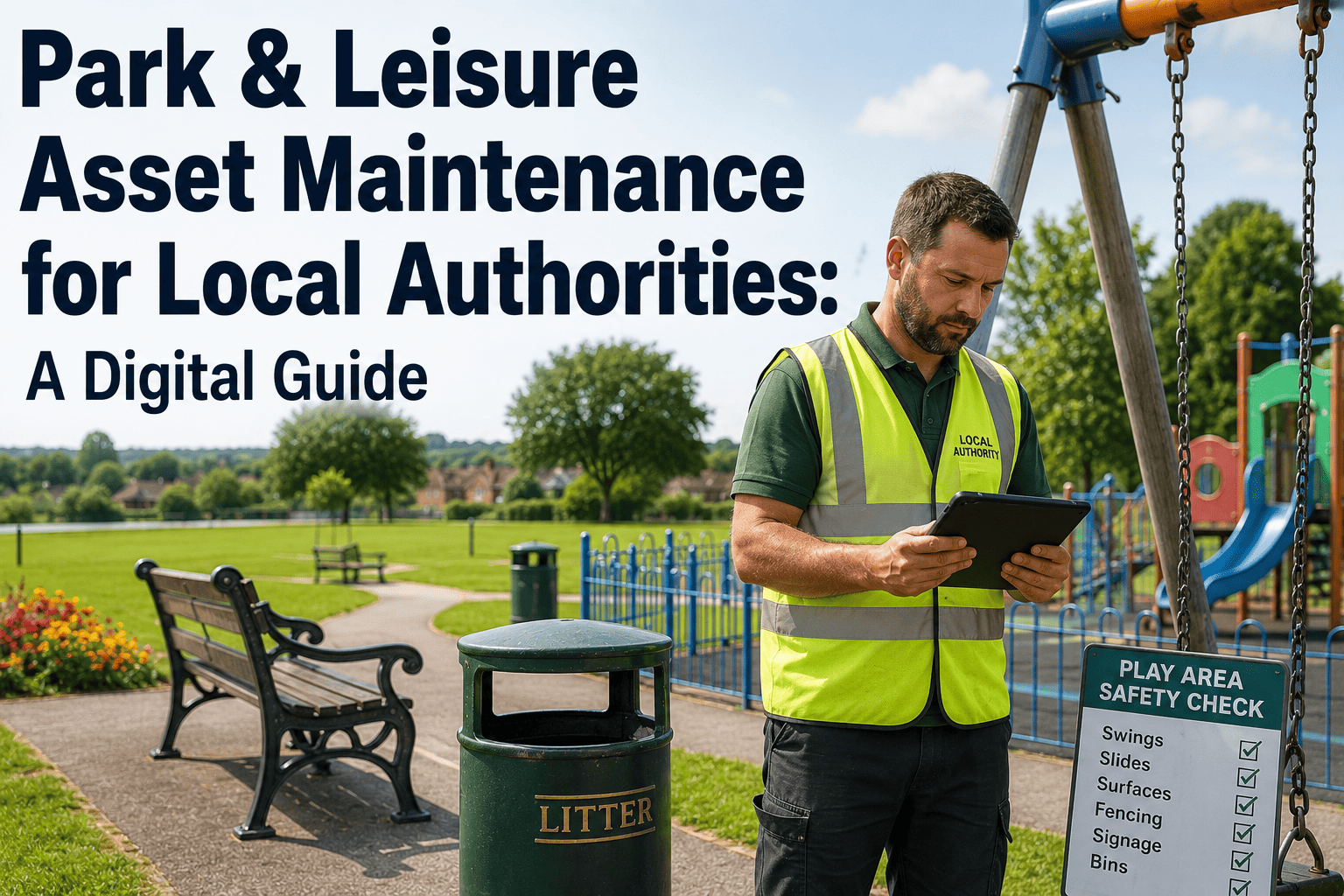
A playground climbing frame, a leisure centre pool hoist and a community hall fire exit all fall under the same leisure team's remit, yet each follows a completely different inspection standard. An estimated 40,000 children a year need hospital treatment after a playground injury, and while BS EN 1176 isn't a legal requirement, courts consistently treat compliance as evidence a council took its duty of care seriously. Start a free trial to see how Oxmaint keeps every park and leisure asset on one inspection record.
40,000
Estimated playground injuries a year in the UK resulting in a hospital visit
3
Recognised tiers of playground inspection: routine visual, operational and annual independent
Annual
Minimum frequency recommended for an independent RoSPA inspection under BS EN 1176
Not Law
BS EN 1176 status — voluntary, but treated by courts as a strong marker of reasonable care
Why a Voluntary Standard Still Matters
BS EN 1176 isn't mandated by law, but it's the benchmark courts, insurers and RoSPA inspectors all measure against. If a child is injured on council equipment, the question isn't just whether the frame met the standard when installed — it's whether the council can prove it kept checking. That proof lives in the inspection record, not in the equipment itself.
The Three Tiers of Playground Inspection
Good practice under BS EN 1176 Part 7 isn't a single annual visit — it's three layers of checking that catch different kinds of failure at different speeds.
Tier 1
Routine Visual Check
A quick walk-round, often weekly, spotting litter, vandalism or obvious hazards before they cause harm.
Tier 2
Operational Inspection
A more detailed check, typically monthly or quarterly, testing moving parts, fixings and surfacing wear.
Tier 3
Annual Independent Inspection
A full RoSPA-standard assessment against BS EN 1176, with a written report and risk ratings for every item.
Where Leisure and Parks Teams Lose Track
01
Playgrounds and Leisure Centres Sit on Separate Systems
One team, two or three disconnected trackers
A parks officer tracking playground kit rarely shares a system with the leisure centre team managing pool plant and gym equipment, even though both roll up to the same service manager who needs one clear picture of risk.
02
Paper Checklists Get Lost or Left Illegible
A weekly visual check is only useful if it survives
Routine visual checks are often ticked off on a clipboard sheet kept in a site office. Months later, when a claim arrives, that sheet may be missing, damaged, or too vague to prove anything was actually checked that week.
03
RoSPA Findings Don't Automatically Become Work Orders
A report sits in an inbox instead of triggering repair
An annual inspection report flags a dozen items needing attention, but if those findings aren't turned into tracked, assigned tasks, some quietly slip through to next year's inspection, unresolved.
04
Community Hall Bookings Clash With Maintenance Downtime
No shared view of when a facility is actually available
Without a shared calendar between the maintenance team and the booking system, a fire door repair or a boiler service can end up scheduled the same afternoon as a fully booked community event.
One Record for Playgrounds, Leisure Centres and Halls
Oxmaint keeps every park and leisure asset, and every inspection tier, on a single register your whole team can see. Sign up to trial it against your own sites, or book a demo to see it set up around your inspection schedule.
Facility Type, Key Risk and What to Check
| Facility Type |
Key Risk |
What to Check |
| Playgrounds |
Worn fixings, damaged surfacing, entrapment risks |
Routine, operational and annual BS EN 1176 inspections |
| Leisure centres |
Pool plant faults, gym equipment wear, water hygiene |
Scheduled servicing tied to manufacturer and legionella intervals |
| Community halls |
Fire door faults, heating outages during bookings |
Maintenance scheduled against a shared booking calendar |
| Open park spaces |
Tree safety, lighting, benches and litter infrastructure |
Regular site walks logged against each individual asset |
What Good Park and Leisure Management Looks Like
Practice 01
Every Asset Logged With Its Own Inspection Cycle
Each swing, slide, pool plant unit and fire door has its own schedule, so routine, operational and annual checks all trigger automatically at the right interval.
Practice 02
Mobile Checklists That Can't Get Lost
A parks officer completes a routine visual check from a phone on site, and the record is saved instantly, not left in a clipboard folder that may or may not survive.
Practice 03
Annual Report Findings Become Tracked Work Orders
Every item flagged in a RoSPA-standard report is converted into an assigned, trackable task, so nothing quietly rolls over into next year's inspection.
Practice 04
One Register Across Every Site and Facility Type
Playgrounds, leisure centres, halls and open spaces sit on the same platform, giving the service manager one view of risk across the whole leisure estate.
How Oxmaint Supports Parks and Leisure Teams
Oxmaint tracks playgrounds, leisure centres and community facilities on one register, with routine, operational and annual inspection tiers scheduled against each asset automatically. Findings from independent inspection reports convert straight into assigned work orders, and every completed check is timestamped for audit and insurance purposes. Book a demo to see it mapped against your own parks and leisure estate.
Frequently Asked Questions
Q
Is BS EN 1176 compliance legally required for council playgrounds?
No, BS EN 1176 is a voluntary standard rather than a statutory requirement. However, councils still owe a legal duty of care under legislation like the Occupiers' Liability Act and the Health and Safety at Work Act, and courts consistently treat BS EN 1176 compliance as strong evidence that reasonable care was taken.
Q
How often should routine visual playground checks happen?
Most councils run routine visual checks weekly, though busier sites or those prone to vandalism may need them more often. The exact frequency should reflect footfall, equipment age and past incident history at each specific site, alongside the recommended operational and annual inspection tiers.
Q
Should leisure centres and playgrounds share the same maintenance system?
Yes, wherever possible. Even though the equipment and standards differ, both usually report to the same service manager, who needs one consistent view of risk, inspection status and outstanding work across the whole leisure estate rather than piecing it together from separate systems.
Q
What's the fastest way to reduce risk in an under-resourced parks team?
Start by making sure annual inspection findings automatically become tracked, assigned work rather than a static report. That single change closes the gap between knowing about a defect and actually fixing it, which is where most avoidable risk quietly accumulates.
Keep Every Park and Leisure Asset Inspection-Ready
Oxmaint gives parks and leisure teams one platform for playgrounds, leisure centres and community facilities, with inspection tiers, RoSPA findings and work orders all connected. Sign up for a free trial to explore it yourself, or book a demo and we'll map it against your own sites.
BS EN 1176 Ready
Mobile Inspection Checklists
RoSPA Findings to Work Orders
Multi-Facility Register
Audit-Ready Records