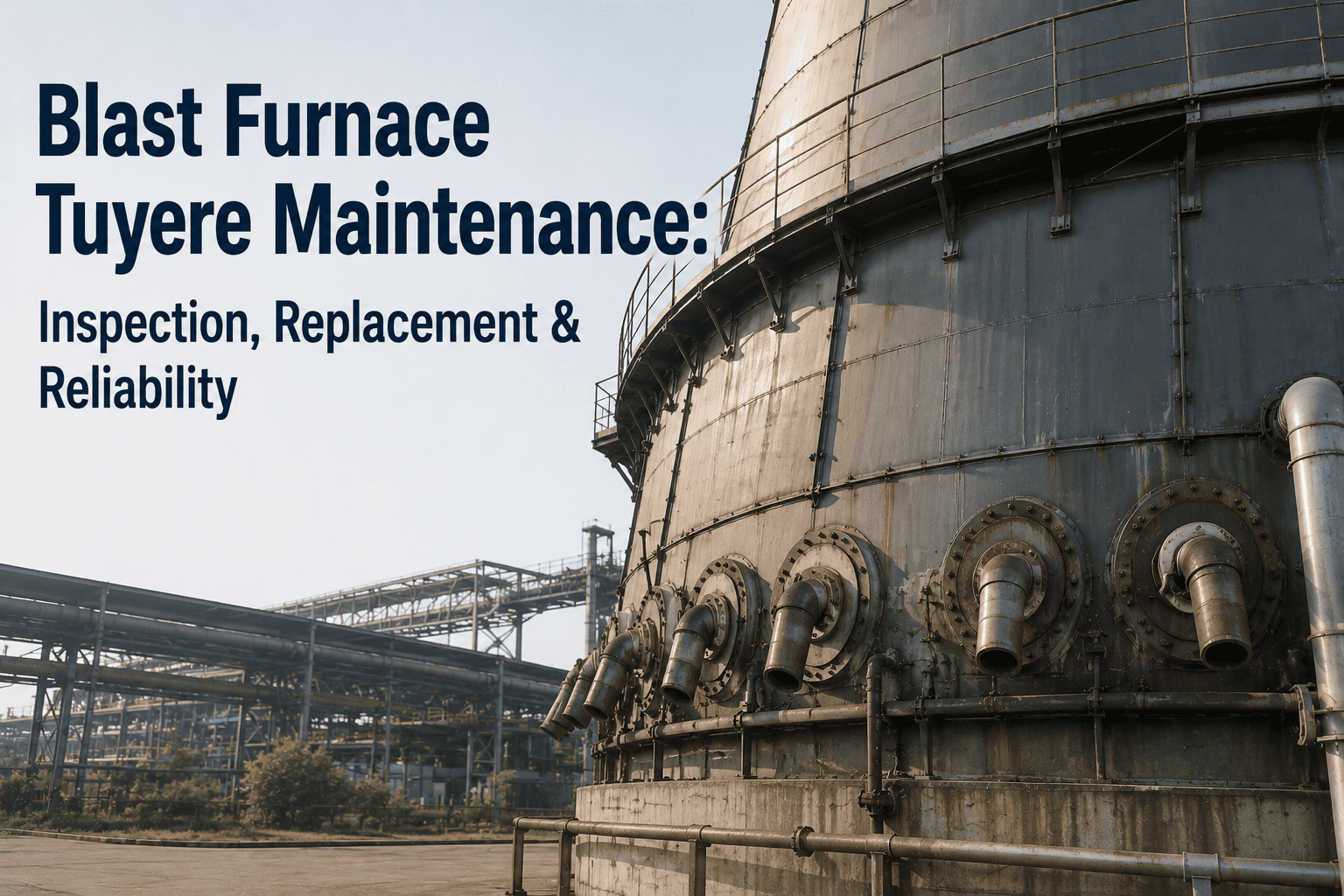
A blast furnace tuyere lives at the harshest junction in the whole plant, copper facing 1,000+ degree hot blast air on one side and cooling water racing through on the other. When a tuyere burns through or a cooling leak goes unnoticed, the result isn't a minor fault, it's an unplanned furnace stoppage or a safety incident. A CMMS like OxMaint tracks cooling water flow, thermal readings, and tuyere replacement history against every furnace asset, so degradation gets caught during a routine check instead of during a blowout.
Catch Tuyere Failures Before They Stop the Furnace
Track cooling water flow, thermal readings, and replacement cycles across every tuyere in your blast furnace.
Manual Checks vs Continuous Water Monitoring
| Aspect | Visual & Manual Inspection | Continuous Cooling Water Monitoring |
|---|---|---|
| How It Works | Operator checks tuyere nose condition during scheduled blowdowns | Flow rate and return temperature sensed continuously on each cooling circuit |
| Detection Speed | Only as frequent as the next planned stoppage | Flags a developing leak within minutes of onset |
| Best Suited For | Confirming erosion, cracking, and physical wear | Catching water ingress before it reaches the raceway |
Four Ways a Tuyere Fails
Nose Burn-Through
Localized overheating thins the copper nose until hot blast breaches straight into the cooling water passage.
Cooling Water Leak
A cracked jacket lets water enter the raceway, risking a steam explosion if not shut down immediately.
Raceway Erosion
Abrasive coke and burden material wear down the tuyere body faster wherever airflow turbulence is highest.
Thermal Cycling Cracks
Repeated heating and cooling during furnace trips fatigues the copper, opening cracks around the nose weld.
A Practical Inspection Rhythm
Daily Flow & Pressure Log
Record cooling water flow rate and return pressure for each tuyere circuit at every shift change.
Weekly Thermal Imaging
Scan the tuyere belt for hot spots that signal a nose thinning before it becomes a burn-through.
Blowdown Visual Check
Inspect nose condition, casting quality, and cooling channel wear during every scheduled stoppage.
Campaign Replacement Plan
Track individual tuyere service life against campaign targets and stage spares ahead of the next changeout.
Tuyere Maintenance Maturity
Reactive Replacement
Tuyeres get swapped only after a failure forces an emergency furnace stoppage.
Scheduled Inspection
Blowdown checks happen on a fixed calendar, but water flow trends aren't tracked between them.
Predictive Monitoring
Water flow, temperature, and thermal scans feed a live trend line, flagging leaks before they reach the raceway.
Why This Matters for Furnace Uptime and Safety
A blast furnace campaign is planned around continuous operation for years, and an unplanned tuyere failure interrupts that in the worst possible way, forcing an emergency shutdown and, in the case of a cooling water breach, creating a genuine safety hazard for the crew on the cast floor. Tracking flow rate deviations and thermal patterns turns a sudden failure into a scheduled changeout, done on the maintenance team's terms rather than the furnace's.
Consistent monitoring is what keeps a blast furnace running through its full planned campaign instead of losing tuyeres one emergency at a time. Sign up free to start tracking cooling water and thermal readings across every tuyere today, or book a demo to see how a live trend line catches a leak before it reaches the raceway.
Keep Every Tuyere on a Planned Replacement Cycle
Cooling water monitoring, thermal scans, and campaign-based replacement tracking, all in one place.
Frequently Asked Questions
How often should blast furnace tuyeres be inspected?
Cooling water flow and pressure should be logged every shift, with a full visual inspection performed at each scheduled blowdown.
What's the first sign of a failing tuyere?
A drop in cooling water flow or a rise in return water temperature on that circuit is usually the earliest warning sign.
Why is a cooling water leak so dangerous?
Water entering the raceway can flash to steam almost instantly, creating a serious explosion risk if the tuyere isn't isolated immediately.
How long does a typical tuyere last in service?
Service life varies widely with burden quality and blast conditions, which is why individual tracking matters more than a fixed calendar date.
Does predictive monitoring reduce unplanned furnace stoppages?
Yes, catching a flow or temperature deviation early lets teams schedule a changeout during a planned stoppage instead of an emergency one.