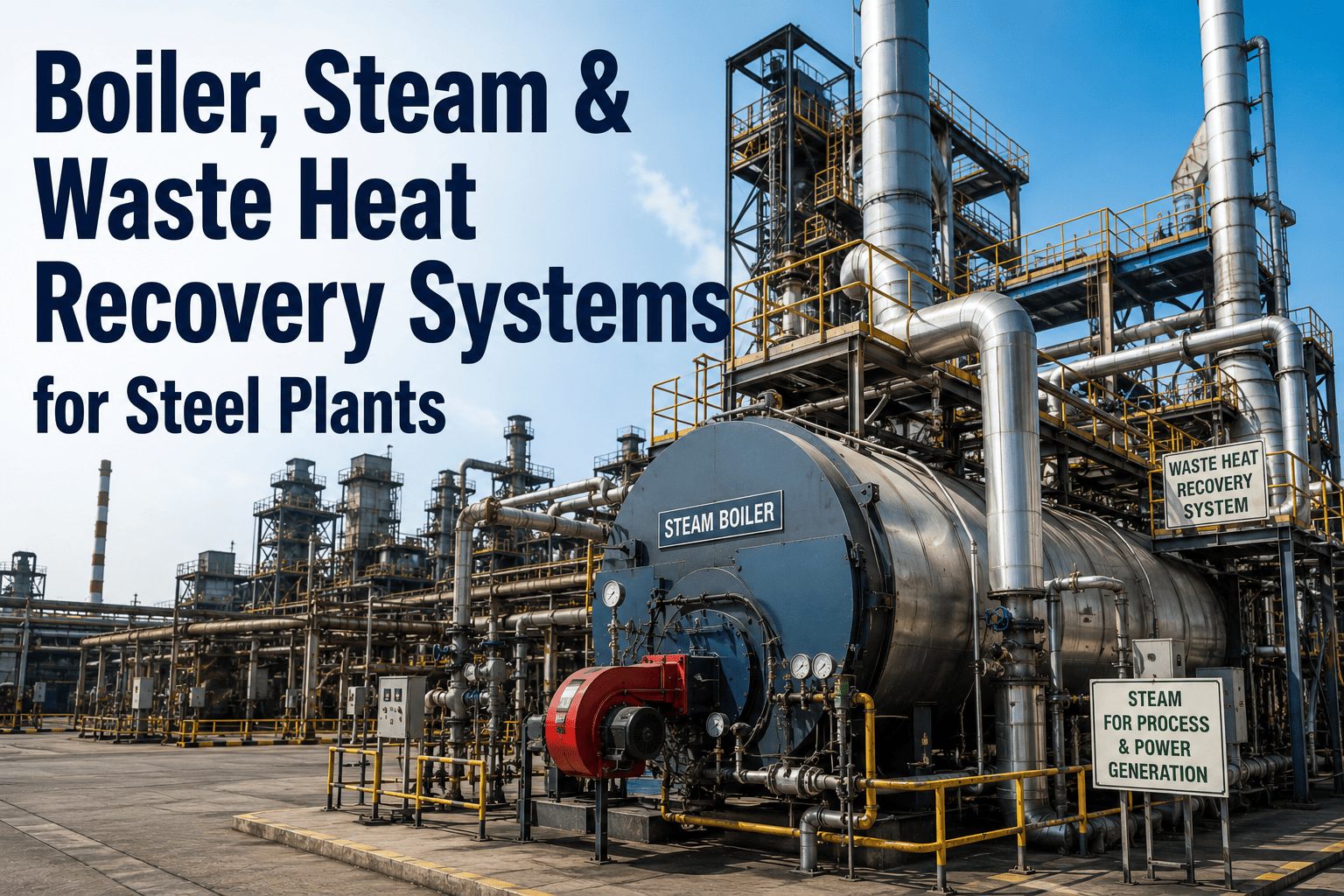
A steel plant throws away enormous amounts of heat every single day, out the flue stack, off the slag, through blast furnace gas that used to just get flared. Waste heat recovery isn't exotic technology, it's just capturing energy the plant already paid for and was about to discard anyway. Sign up to see how Oxmaint keeps your boilers, steam traps, and WHR systems running at the efficiency they were designed for.
20-30%
Of total process energy input in a typical steel plant is potentially recoverable as waste heat
15-30%
Of steam traps in a typical plant are failed at any given time without a regular survey program
2%+ Fuel
Extra fuel typically burned per millimeter of scale buildup on boiler heat transfer surfaces
2-4 Years
Typical payback window for a well-scoped waste heat recovery installation
Why Waste Heat Recovery Gets Left on the Table
Recovering waste heat competes for capital against projects with more obvious, immediate returns, so it often gets deferred even when the payback math is favorable. The bigger issue is usually that the plant doesn't have a clear picture of where the recoverable heat actually is, or that an existing WHR system is running well below its designed efficiency because maintenance on it has quietly slipped.
Where Waste Heat Actually Comes From in a Steel Plant
| Source |
Common Recovery Method |
Typical Use of Recovered Energy |
| Coke oven and blast furnace gas |
Combustion in waste heat recovery boilers |
Steam generation for process use or power |
| Blast furnace top gas pressure |
Top-pressure recovery turbines |
On-site electricity generation without added fuel |
| Sinter plant and flue gas |
Heat exchangers feeding preheat or steam circuits |
Preheating combustion air or feedwater |
| Slag heat |
Dry slag granulation with heat exchange |
Steam generation from a stream previously discarded entirely |
A WHR System Only Pays Back If It Stays Maintained
Oxmaint schedules recurring inspections for waste heat boilers, heat exchangers, and recovery turbines, so the system keeps performing at the efficiency it was designed for instead of quietly degrading. Sign up for a free trial to build your first WHR maintenance checklist, or book a demo and we'll walk through your current setup.
Steam Trap Failure Modes and What They Actually Cost
| Failure Mode |
What Happens |
Cost Impact |
| Failed open |
Live steam blows straight through continuously |
Highest and most direct energy waste of any failure type |
| Failed closed |
Condensate backs up in the line instead of draining |
Waterlogging risking water hammer and equipment damage |
| Partially blocked |
Reduced condensate flow, gradual efficiency loss |
Harder to detect, often missed without a formal survey |
Manual Steam Trap Surveys vs Digital Tracking
Manual Survey
Done once a year at best, if it's scheduled at all
Findings recorded on paper, easy to lose track of over time
No easy way to see which traps fail repeatedly
Digital Tracking
Recurring survey checklist scheduled automatically
Every trap's history logged against its own asset record
Repeat failures visible immediately, pointing to a root cause
How Oxmaint Supports Boiler and Steam System Maintenance
Oxmaint schedules steam trap surveys, boiler descaling, and WHR equipment inspections as recurring checklists tied to each asset, with every finding logged so a repeatedly failing trap or a slipping boiler efficiency trend becomes visible over time. Book a demo to see how it could map to your existing steam network and waste heat recovery assets.
Frequently Asked Questions
Q
How often should a steam trap survey actually be done?
Most plants benefit from at least an annual survey, with high-pressure or high-value steam lines checked more often since a failed trap there wastes considerably more energy per hour than one on a low-pressure branch.
Q
Why does boiler scale have such an outsized effect on fuel use?
Scale insulates the heat transfer surface, forcing the boiler to burn more fuel to move the same amount of heat into the water. Even a thin layer measurably raises fuel consumption, which is why descaling has a fast payback.
Q
What's the simplest waste heat recovery project a plant can start with?
Flue gas heat exchange for combustion air or feedwater preheating is usually the most accessible starting point, since it doesn't require the scale of investment a full recovery boiler or turbine project does.
Q
Does an existing WHR system need different maintenance than a standard boiler?
The fundamentals overlap, but WHR equipment often handles dirtier or more variable gas streams than a standard boiler, so heat exchanger fouling and inlet conditions typically need closer, more frequent attention.
Stop Letting Recovered Energy Leak Back Out Through a Failed Trap
Oxmaint gives steel plant teams scheduled steam trap surveys, boiler descaling checklists, and WHR equipment inspections, all tracked against every asset over time. Sign up for a free trial to build your first checklist, or book a demo and we'll walk through it against your own steam and waste heat systems.