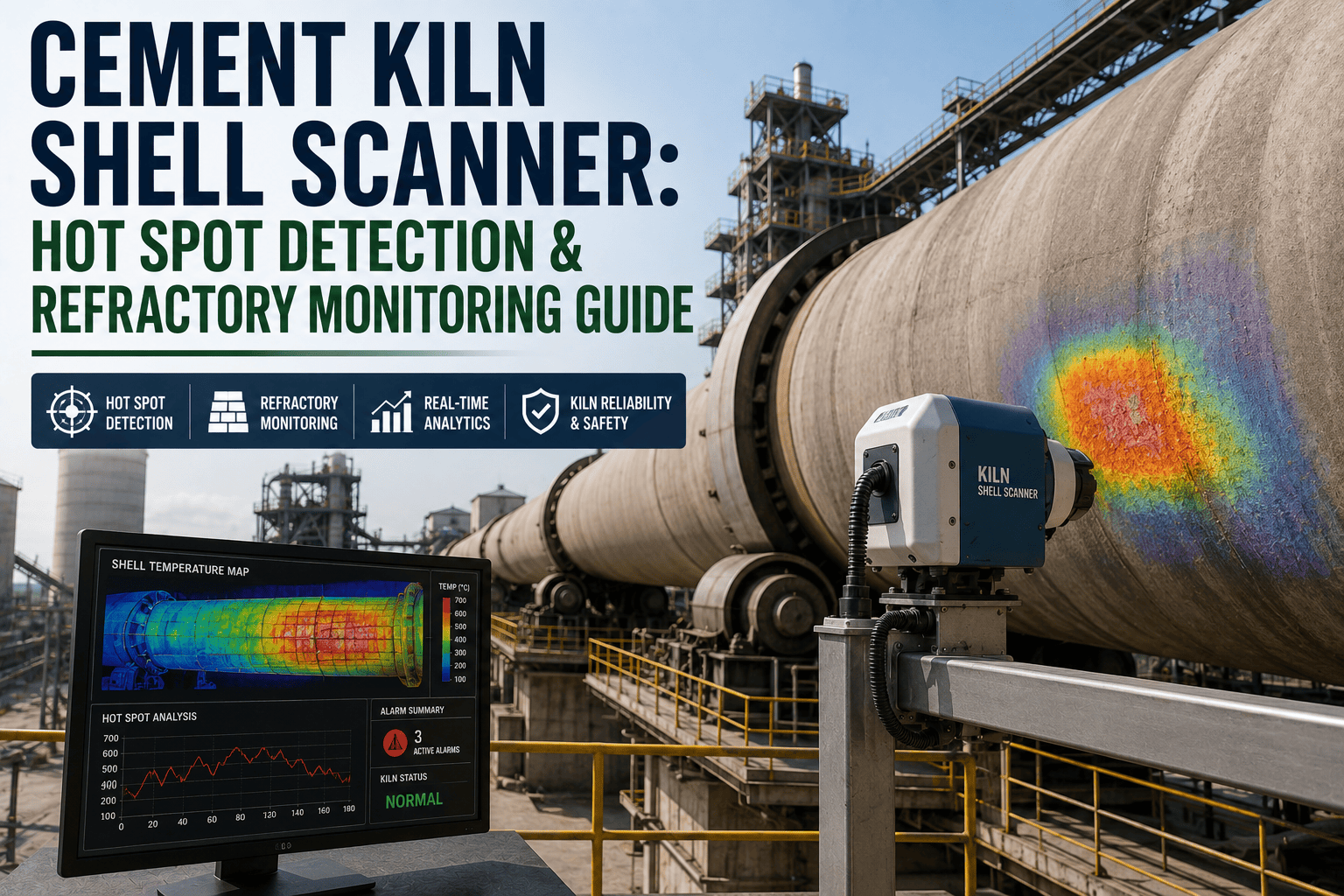
A kiln shell reading 320°C isn't automatically a crisis, but a shell that was reading 280°C in that same spot two weeks ago is telling a very different story. Refractory failure rarely announces itself with one alarming number, it shows up as a slow climb that a single daily reading can easily miss. Sign up to see how Oxmaint turns shell scanner data into an early warning instead of a snapshot.
400°C
The absolute shell temperature ceiling beyond which the steel itself can suffer permanent damage
30+ Days
How far ahead continuous scanning can flag a developing hot spot before it becomes visible as a red shell
6-12 Points
Typical thermocouple coverage per kiln section, leaving most of the shell surface unmonitored between them
$500K-$1.5M
Typical lost production cost of a single 24-hour unplanned kiln shutdown
Why the Trend Matters More Than the Absolute Reading
A single shell temperature reading tells you where things stand right now, it doesn't tell you where they're headed. Coating thinning typically shows up as a gradual rise of only a few degrees per day in the affected zone, easy to miss against a fixed global alarm but obvious against a rolling baseline for that specific section of shell. That difference, a few degrees above a zone's own history versus tens of degrees above one blanket threshold, is usually the gap between catching a coating problem early and discovering a fully exposed brick.
Where Kiln Shell Problems Actually Show Up First
| Zone / Parameter |
Warning Sign |
Preventive Task |
| General shell zones |
Sustained readings above 300°C typically point to a refractory issue |
Continuous scanning against a zone-specific temperature baseline |
| Burning zone |
Readings above 350°C are considered critical given the higher process temperature |
Priority alert threshold with immediate escalation to the operations team |
| Protective coating layer |
A gradual rise of a few degrees per day signals the coating is thinning |
Trend-based alerting rather than waiting for an absolute threshold |
| Tyre & shell curvature |
Ovality or tyre creep developing alongside a thermal anomaly in the same section |
Curvature measurement correlated with thermal data at tyre sections |
| Sensor coverage gaps |
Pillars and structural obstructions create shadow zones with no direct readings |
Multiple scanner positions stitched into one full circumferential map |
Shell Scanner Data Linked to Refractory History, Not Just Today's Reading
Oxmaint pulls in data from your existing shell scanners and overlays it with refractory installation dates and brick specifications, so a temperature reading is judged against that zone's own history rather than one blanket number. Sign up for a free trial to see it against your own kiln, or book a demo and we'll walk through your scanner setup.
Set Zone-Specific Thresholds Before the Global Alarm Fires
| Approach |
How the Alert Triggers |
Practical Effect |
| Fixed global threshold |
One set point applied across the whole shell regardless of zone |
Anomalies often only surface 15-30°C above the threshold, well into the failure |
| Zone-specific baseline |
Each zone's normal thermal behavior learned individually over time |
Deviations as small as 2-5°C above that zone's own baseline can be flagged |
Point Sensors vs Full-Field Thermal Coverage
Point Sensors
A handful of thermocouples cover only a small fraction of the total shell surface
A hot spot forming between sensor positions can go undetected entirely
Alarms trigger against a fixed threshold with no spatial context
Full-Field Thermal Coverage
Infrared scanning captures a temperature reading across the entire visible shell surface
A hot spot is caught wherever it forms, not just at a pre-set sensor location
Spatial and time-based patterns help distinguish refractory failure from coating shift or ring formation
How Oxmaint Supports Kiln Shell Monitoring
Oxmaint connects to your existing shell scanner hardware, whatever brand or configuration it is, and overlays live thermal readings with refractory brick type, installation date, and remaining thickness data for each zone. A developing trend, not just a single reading, is what generates the work order, escalated by zone severity so the burning zone never waits behind a lower-priority alert. Book a demo to see it mapped against your own kiln's scanner setup.
Frequently Asked Questions
Q
Why is a shell temperature trend more useful than a single reading?
Refractory coating thins gradually, so the temperature it protects rises by only a small amount each day. A one-time reading looks normal in isolation, but tracked over days that same reading is part of a clear upward trend worth investigating.
Q
Why does the burning zone get a different critical temperature than the rest of the shell?
The burning zone runs at a much higher internal process temperature than the rest of the kiln, so the same refractory thickness loss shows up as a higher shell reading there. A single plant-wide threshold would either miss early burning zone issues or over-alarm on other zones.
Q
Why does a hot spot get correlated with tyre curvature data?
A thermal anomaly appearing alongside developing ovality or tyre creep in the same section points toward a structural cause rather than a simple coating issue, which changes how urgently and how the repair needs to be scoped.
Q
What's the fastest way to move kiln monitoring off manual clipboard checks?
Start by connecting your existing scanner hardware to a system that logs zone-specific history, then layer refractory installation records on top once thermal trend data is flowing consistently.
Catch a Developing Hot Spot Weeks Before It Becomes a Shutdown
Oxmaint gives cement plant teams zone-specific temperature baselines, refractory life tracking, scanner-agnostic integration, and predictive maintenance alerts for the whole kiln shell in one platform. Sign up for a free trial to explore it yourself, or book a demo and we'll walk through it against your own kiln.