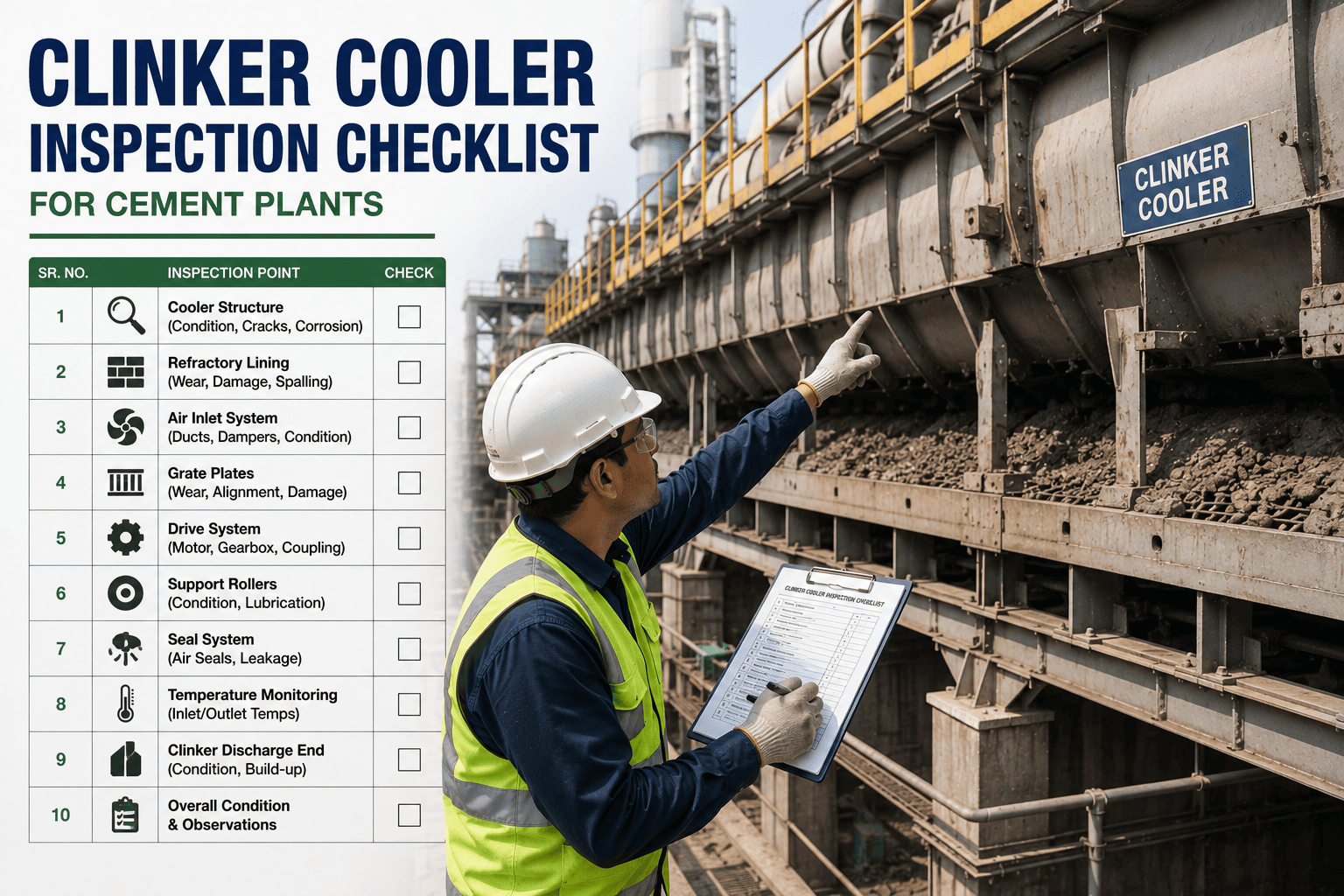
A clinker cooler takes clinker out of the kiln at around 1400°C and has to bring it down fast enough to protect the grate, recover heat back into the process, and hand off a stable product to the mill. A cracked grate plate lets clinker fall into the undergrate air chamber, a fan running below its rated airflow leaves clinker leaving the cooler too hot, and an unnoticed red river through the bed wastes recoverable heat every minute it runs. This checklist covers what to verify across grate plates, cooling fans and airflow, and hot air loss and wear. Sign up to turn this checklist into a guided digital procedure your cooler crew follows on every inspection round.
3 Zones Checked
Grate plates, cooling fans and airflow, and hot air loss covered in this checklist
~1400°C In
Approximate clinker temperature entering the cooler from the kiln
Every Shift
How often clinker outlet temperature and fan airflow should be logged
Zero Tolerance
Room for skipping a grate plate check or a red river inspection
Why Cooler Checks Can't Be Rushed
A clinker cooler runs at the intersection of extreme heat, abrasive material, and heat recovery efficiency. The same grate, fan, and hot air checks repeated correctly every shift are what keep clinker quality stable and fuel costs from creeping up unnoticed.
Grate Plate Inspection
Grate Plate Cracking & Wear
Inspect grate plates for cracking, warping, or worn air slots that let clinker fall into the chamber below
Grate Drive & Stroke Motion
Check the grate drive delivers a consistent stroke so clinker advances evenly without piling or gaps
Sub-Grate Clinker Fallthrough
Check the undergrate chamber for excess fallen clinker, which signals grate plates need attention
Make Cooler Checks A Habit, Not A Memory
Oxmaint guides your crew through grate, fan, and hot air loss inspections step by step, with photo proof and sign-off logged against each cooler zone. Sign up for a free trial to build your clinker cooler routine, or book a demo to see it in action.
Cooling Fans & Airflow Checks
Fan Airflow & Damper Position
Verify each cooling fan delivers rated airflow and dampers hold the position the process demands
Fan Bearing & Vibration Check
Check fan bearings for excess heat or vibration, since dust-laden air accelerates bearing wear
Air Distribution Across The Bed
Confirm cooling air distributes evenly across the clinker bed rather than channeling through one section
Hot Air Loss & Wear Checks
Red River & Hot Spot Scan
Scan the clinker bed for a red river of unquenched clinker, which wastes recoverable heat and stresses the grate
Casing Seal & Leakage Check
Inspect casing seals and inspection doors for air leakage that lowers heat recovery efficiency
Clinker Outlet Temperature Log
Track clinker outlet temperature per shift, since a rising trend often points to a fan or grate issue upstream
What A Skipped Check Can Cost You
| Check Skipped |
Likely Consequence |
| Grate plate inspection |
A cracked plate lets clinker fall into the undergrate chamber |
| Fan airflow check |
Clinker leaves too hot, straining the downstream conveyor and mill |
| Red river scan |
Unquenched clinker wastes recoverable heat and stresses the grate plates |
| Casing seal check |
Air leakage lowers heat recovery efficiency and raises fuel costs |
Where A CMMS Fits Into Cooler Checks
Oxmaint ties this checklist to the grate plates, cooling fans, and casing as tracked assets, logging outlet temperature and fan performance over time so a developing issue gets flagged before it affects clinker quality.
Frequently Asked Questions
Q
What is a red river in a clinker cooler?
A red river is a visible streak of unquenched clinker moving through the bed without cooling properly, usually caused by uneven airflow distribution or a grate section not advancing material correctly.
Q
How often should grate plates be inspected?
Grate plates should be visually checked every shift for fallthrough signs and inspected up close at every planned shutdown, since cracking often starts small and worsens under continued thermal cycling.
Q
Can a CMMS track clinker outlet temperature trends?
Yes, a CMMS can log clinker outlet temperature per shift against the cooler asset and flag a rising trend before it points to a failing fan or grate section.
Keep Your Clinker Cooler Running Efficient And Reliable
Oxmaint guides your crew through grate, fan, and hot air loss inspections and logs every reading against the cooler asset automatically. Sign up for a free trial to build your clinker cooler checklist, or book a demo to see it in action.