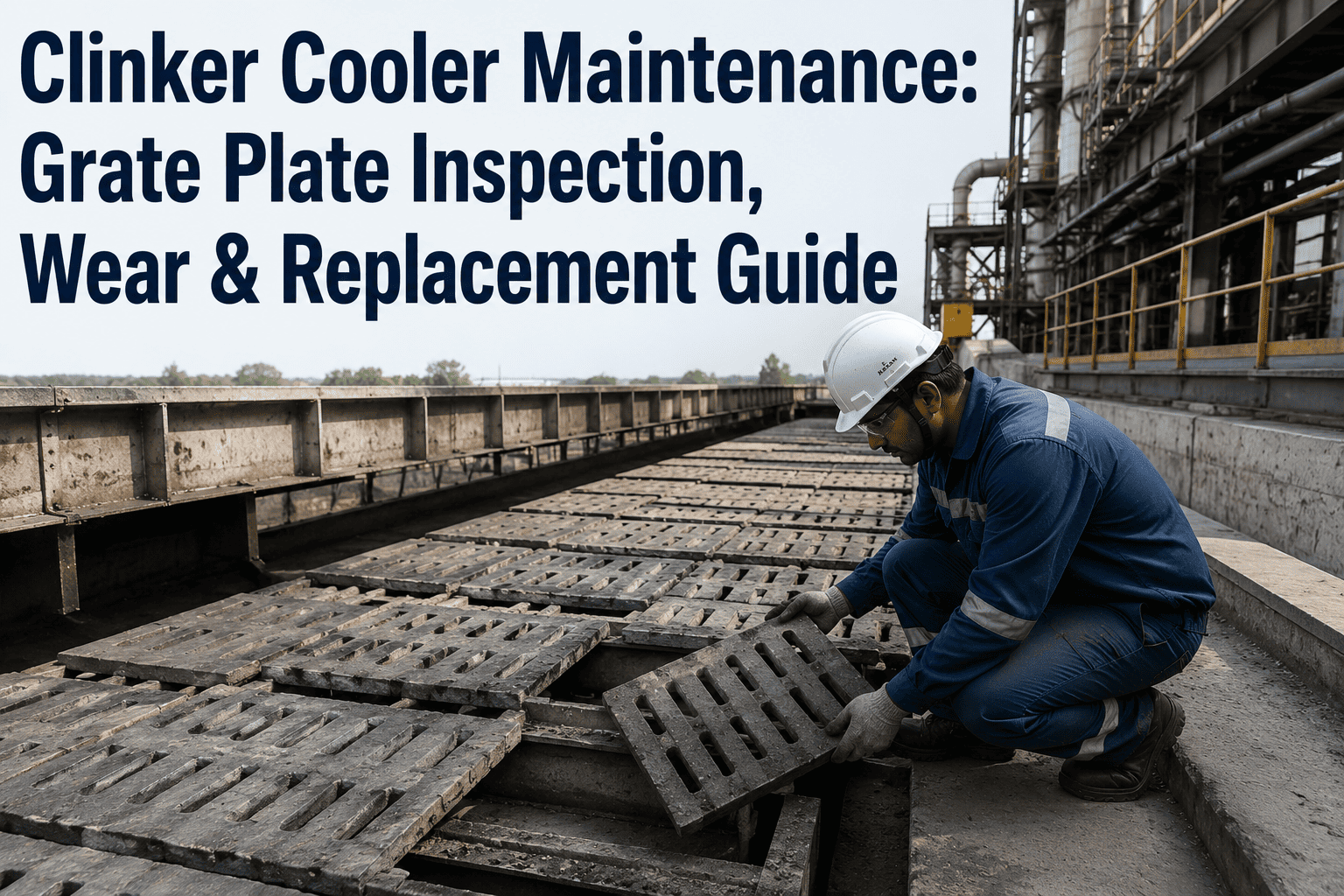
A worn clinker cooler grate plate rarely announces itself, it hides under a layer of clinker buildup during a routine walkdown while it quietly lets red-hot material bypass the cooling zone underneath. One US cement plant found this out the hard way: a grate plate failure that had gone unnoticed under clinker deposits triggered 72 hours of unplanned downtime and roughly $540,000 in lost production before emergency repairs even began. Start a free trial to see how Oxmaint tracks grate plate wear zone by zone before it turns into a breakthrough event.
3-4x
Faster wear rate at the Zone 1 hot end compared to the Zone 3 cold end of the cooler
$540K
Lost production from one undetected grate plate failure and the 72-hour outage that followed
5-15%
Rise in specific heat consumption once worn plates create red rivers of poorly cooled clinker
68-75%
Heat recovery efficiency in a well-maintained cooler, versus 58-63% with worn, untracked plates
Why Grate Plate Wear Costs More Than the Plates Themselves
Worn plates don't just need replacing, they change how air moves through the entire clinker bed. Enlarged slot openings let fines fall through, hot spots form where airflow channels through gaps, and free lime develops in the affected sections, hurting early cement strength before anyone traces it back to the cooler. A cooler failure that stops clinker transport also forces the kiln to stop within hours, and the thermal cycling from that unplanned kiln stop can compress refractory campaign life by weeks.
Not Every Cooler Zone Wears the Same Way
| Zone |
Conditions |
Recommended Inspection Interval |
| Zone 1, hot end |
Direct kiln discharge above 1,000°C, maximum thermal stress and abrasion |
Every planned shutdown, roughly every 60-90 days |
| Zone 2, mid cooling |
Significantly cooled clinker, still abrasive but lower thermal load |
Every second or third shutdown, roughly every 120-180 days |
| Zone 3, cold end |
Low-temperature clinker, wear driven mainly by abrasion resistance |
Less frequent, but tracked separately rather than skipped |
Plate-Level Wear Records, Not a Generic Cooler Log
Oxmaint logs thickness readings against each grate plate record, calculates wear rate in mm per operating hour, and projects remaining service life before the next planned shutdown. Sign up for a free trial to see it against your own cooler zones, or book a demo and we'll walk through a grate plate wear tracking program built for your line.
Warning Signs Worth Acting On Before the Next Shutdown
| Signal |
Likely Cause |
Action |
| Falling secondary air temperature |
Air bypassing the clinker bed through worn plate slots |
Schedule zone-specific plate thickness measurement |
| Discharge temperature above target |
Clinker channeling through gaps left by broken or missing plates |
Inspect for red river channeling before the next campaign |
Between Shutdowns vs At the Planned Outage
Between Shutdowns
Secondary and tertiary air temperature trended for drift
Under-grate pressure and cooler drive current watched for changes
Discharge temperature checked against the sub-65°C target
At the Planned Outage
Plate thickness measured by zone and logged against baseline
Cracked, deformed or missing plates and bolts replaced
Snowman formation and clinker buildup cleared from Zone 1
How Oxmaint Supports Cement Plant Cooler Programs
Oxmaint registers each grate zone as its own asset, applies zone-specific inspection intervals instead of one fixed schedule, and links wear rate data to spare parts stock so replacement plates are ready before the outage, not ordered on the day of it. Condition history, thermal readings and replacement records all stay attached to the plate, not scattered across separate shutdown reports. Book a demo to see it mapped against your own cooler line.
Frequently Asked Questions
Q
Why does Zone 1 need such frequent inspection compared to the rest of the cooler?
Zone 1 receives clinker straight from the kiln at temperatures exceeding 1,000°C, combining maximum thermal stress with the most abrasive material contact. That combination wears plates three to four times faster than the cold end, which is why it should be measured at every planned shutdown while later zones can go longer between checks.
Q
What happens if worn grate plates aren't replaced on time?
Delayed replacement leads to plate fracture, clinker fall-through into under-grate chambers, and potential structural damage to the cooling air ducts and support frames. A planned plate replacement takes hours during a scheduled outage, while recovering from a fall-through event typically takes days with production stopped throughout.
Q
Why is grate plate wear treated as a quality issue, not just a maintenance one?
Worn plates alter airflow distribution across the grate, creating hot zones that raise clinker discharge temperature and generate free lime in the affected sections. That directly impacts cement quality, particularly early strength development, and increases grinding energy consumption downstream.
Q
Can manual visual inspection alone catch grate plate wear reliably?
Not consistently. Worn plates are often obscured by clinker buildup during manual walkdowns, and the extreme heat at the hot end limits how thoroughly an inspector can assess that zone. Structured thickness measurement logged against each plate closes that visibility gap.
Turn Grate Plate Wear Into a Managed Program, Not an Emergency
Oxmaint gives cement plant teams zone-specific grate plate PM scheduling, wear rate and remaining life projections, and spare parts alerts tied to each plate record. Sign up for a free trial to explore it yourself, or book a demo and we'll walk through it against your own cooler line.