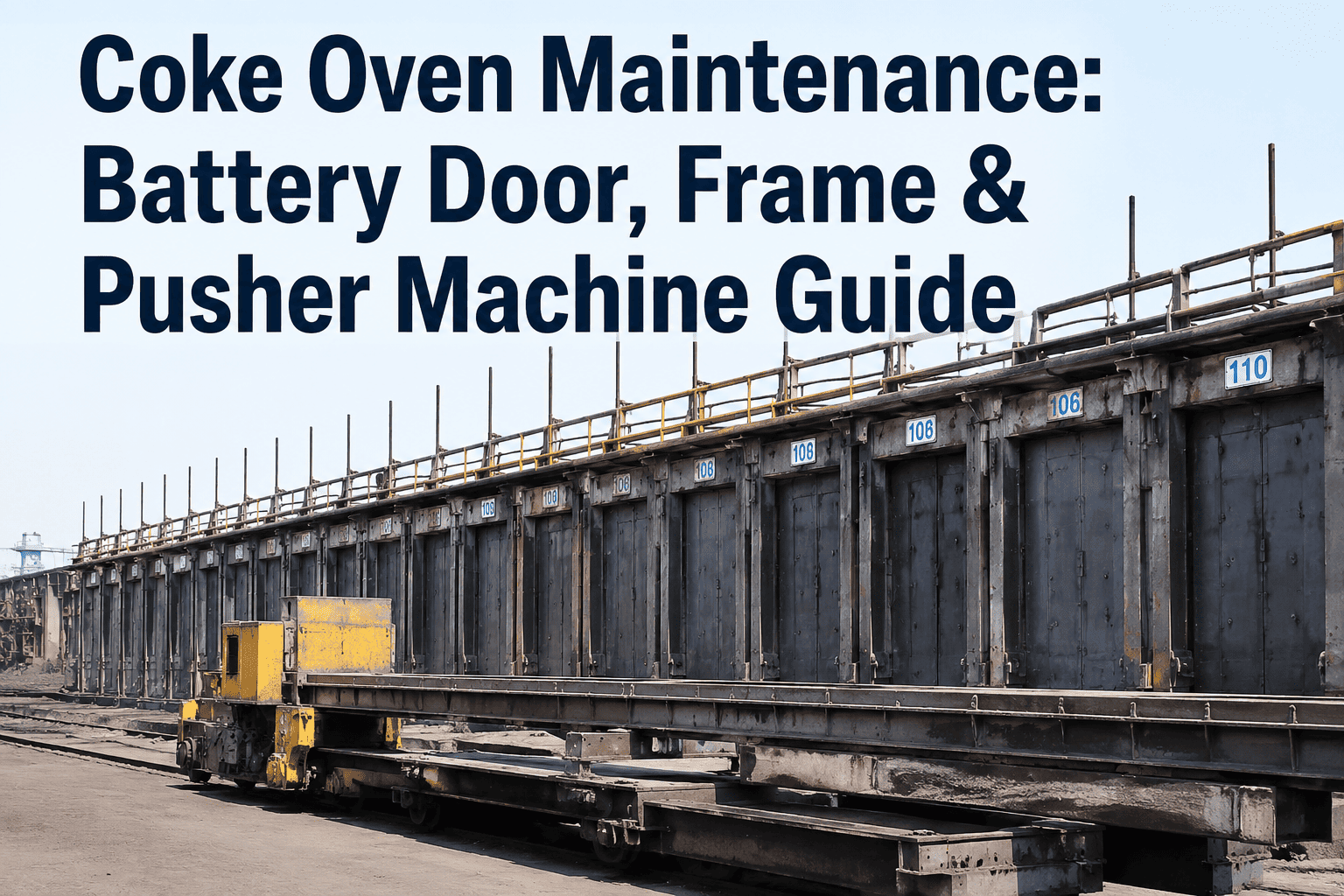
A coke oven battery does not tolerate a loose seal. Every door that does not close flush against its frame lets gas escape into the atmosphere, and every pusher ram that is even slightly out of alignment scrapes against the oven walls instead of gliding through them. Sign up to see how Oxmaint tracks battery doors, frames and pusher machines across your coke plant in one place.
A Coke Battery in Numbers
1000°C+
Chamber heat that every door seal must hold against continuously
2 Sides
Coke side and pusher side doors, each with its own seal and frame
1 Ram Pass
Is all it takes for a misaligned pusher to damage a refractory wall
Door Leaks Are Rarely About the Door Itself
The Door and Frame Are One Sealing System
Most emissions problems at a coke battery get blamed on a worn door gasket, but the seal only works if the frame it presses against is still flat and true. A frame that has warped from repeated heat cycling will leak even with a brand new gasket installed, because the sealing surface itself is no longer flat. Treating the door and the frame as one connected sealing system, rather than two separate parts, is what actually keeps gas inside the oven.
The Three Assets That Decide Battery Reliability
Battery Doors
Gasket wear and door warping from repeated heat cycling break the seal against the frame, letting raw gas escape and staining the battery front with visible emissions.
Door Frames
Thermal warping over years of oven cycling changes the sealing plane, so a frame can defeat even a properly maintained door gasket if it is never checked for flatness.
Pusher Machine
Ram guide wear and alignment drift let the pusher head contact the oven walls during a push, scoring refractory brick that is far more costly to repair than the ram itself.
Inspection Checklist for Doors, Frames and Pusher Systems
| Asset |
Common Wear or Failure Mode |
Preventive Task |
| Door gaskets |
Compression set and heat degradation reducing seal contact |
Visual leak check at each charging cycle, gasket replacement on schedule |
| Door frames |
Frame warping from repeated thermal expansion and contraction |
Sealing surface flatness measurement on a fixed inspection cycle |
| Pusher ram & guides |
Guide wear allowing ram deflection and wall contact during push |
Ram centerline alignment check before each pushing shift |
| Leveler bar & extractor |
Bar wear affecting coke leveling and extraction consistency |
Wear measurement and replacement tracking per push cycle count |
| Battery track & rail |
Rail wear affecting pusher machine travel accuracy along the battery |
Rail alignment and wear inspection on a fixed interval |
Every Door, Every Frame, One Reliability Record
Oxmaint registers battery doors, frames, gaskets, pusher rams and leveler bars as tracked assets with their own inspection history, so a leak or an alignment issue can be traced back to the exact door or oven position that caused it. Sign up for a free trial to see it against your own coke battery, or book a demo and we will walk through your plant.
Fixing Leaks as They Appear vs Tracking Every Door
| Approach |
How It Plays Out |
Result on Battery Reliability |
| Reactive repair |
A leak is fixed only after it is visibly noticed on the battery front |
Emissions exposure and gradual frame damage in the meantime |
| Fixed schedule PM |
Gaskets and rams serviced at set intervals regardless of actual wear |
Some doors overserviced, some worn doors run past their limit |
| Door-by-door tracking |
Each door and frame logged individually with its own leak and wear history |
Repeat-offender doors identified and addressed before chronic leaks form |
How Oxmaint Supports Coke Battery Reliability
Oxmaint tracks every battery door, frame, gasket, pusher ram and leveler bar as an individual asset by oven number, logging inspection readings and leak history against each one. A door with a pattern of repeat leaks or a pusher alignment drifting out of tolerance triggers a work order early, before it becomes an emissions event or a refractory repair. Book a demo to see it mapped against your own coke oven battery.
Frequently Asked Questions
Q
Why does replacing a door gasket not always stop a gas leak?
Because the gasket can only seal properly against a flat frame, and a frame that has warped from years of thermal cycling will still leak with a new gasket unless the sealing surface itself is corrected.
Q
What happens if a pusher ram is even slightly out of alignment?
A misaligned ram can contact the oven walls during a single push, scoring or cracking refractory brick that is significantly more expensive and time-consuming to repair than the pusher components themselves.
Q
Why should each coke oven door be tracked individually rather than as a group?
Some doors develop a pattern of repeat leaks tied to a specific frame or oven position, and that pattern is only visible when leak and repair history is logged door by door instead of averaged across the battery.
Q
How can a coke plant move from reactive leak repair to preventive maintenance?
Register each door, frame, gasket and pusher component as a tracked asset by oven number, then log inspection and leak data against it so a developing problem is caught before it shows up as visible emissions.
Stop Leaks and Misalignment Before They Become Emissions Events
Oxmaint gives coke plant teams door and frame tracking, pusher alignment checks, gasket replacement logs and preventive maintenance across the entire battery. Sign up for a free trial to explore it yourself, or book a demo and we will walk through it against your own coke oven battery.