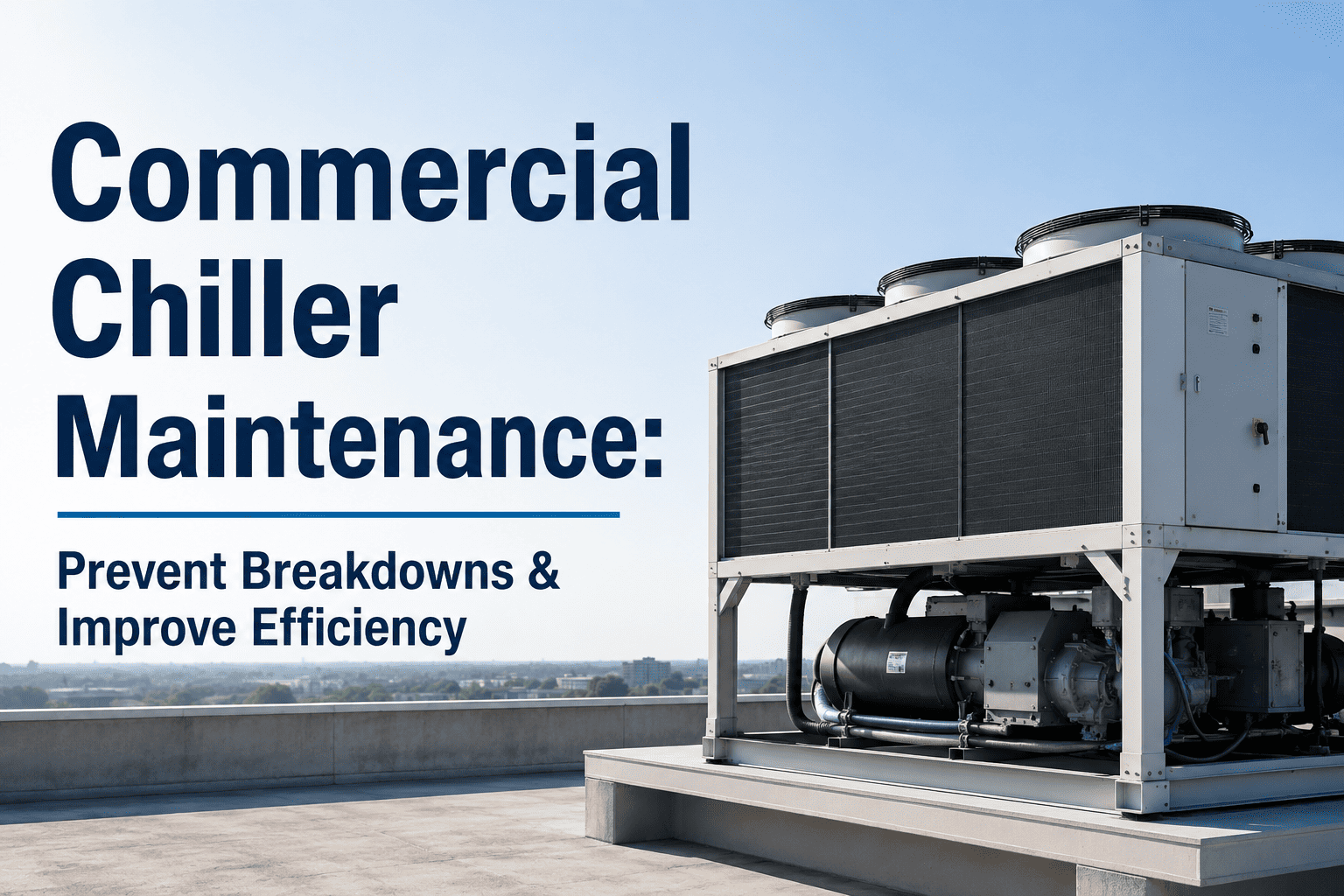
A chiller rarely fails without warning. Long before a compressor seizes or a tube ruptures, the approach temperature has been creeping up, the oil has been picking up moisture, and the energy bill has been quietly climbing. Most FM teams only notice once the cooling stops, but by then the damage that caused it has usually been building for months. A CMMS like OxMaint keeps oil analysis results, condenser cleaning cycles, and refrigerant checks on a tracked schedule, so the warning signs show up before the breakdown does.
Catch Chiller Efficiency Loss Before It Hits the Energy Bill
Track condenser cleaning, oil analysis, and refrigerant checks on a schedule that actually gets followed.
Air-Cooled vs Water-Cooled: What Changes
| Aspect | Air-Cooled Chillers | Water-Cooled Chillers |
|---|---|---|
| Main Fouling Risk | Dust and debris building up on condenser coils | Scale and corrosion inside condenser water loops |
| Water Treatment | Not typically required | Ongoing chemical treatment to prevent scaling and bacterial growth |
| Cleaning Frequency | Coil cleaning at least seasonally, more often in dusty environments | Tube cleaning quarterly to annually depending on water quality |
The Four PM Tasks That Actually Move the Efficiency Needle
Condenser Tube Cleaning
Fouled tubes raise approach temperature and quietly cost efficiency, well before anything looks like a fault.
Oil Analysis
Catching refrigerant dilution in the oil early protects compressor bearings from damage that's expensive to reverse.
Refrigerant Checks
Leak detection and charge verification prevent the slow capacity loss that a low charge causes over time.
Approach Temperature Trending
Tracking this figure over time reveals fouling and efficiency loss long before it shows up as a complaint.
A Practical PM Cadence
Daily
Log operating temperatures, pressures, and flow rates on every shift to build a baseline that flags drift early.
Weekly
Run a short visual walkdown checking for unusual noise, vibration, and visible leaks or corrosion.
Monthly
Check refrigerant levels, verify water treatment, and calibrate sensors that feed the control system.
Annual
Full shutdown inspection: tube cleaning, oil panel analysis, and a complete performance summary report.
Chiller Maintenance Maturity
Reactive Only
Service happens when the chiller fails or an energy bill spike prompts someone to finally look.
Scheduled but Untrended
PM tasks happen on schedule, but oil results and approach temperatures aren't tracked over time to spot drift.
Trend-Driven
Oil analysis, refrigerant checks, and efficiency readings are logged and trended, catching fouling before it costs money.
Why Deferred Maintenance Shows Up in the Energy Bill First
A 10% efficiency degradation on a large commercial chiller can add tens of thousands of pounds a year in extra electricity, and that number climbs well before anything actually breaks. Structured preventive maintenance also changes the equipment's working life, with well-maintained chillers commonly running 30 years or more compared to 15 to 18 years for units maintained reactively. The difference isn't the hardware, it's whether fouling, oil contamination, and refrigerant loss get caught while they're still cheap to fix.
A PM schedule only protects a chiller if it's actually followed and the results are actually reviewed. Sign up free to start tracking your chiller PM programme today, or book a demo to see how FM teams trend oil analysis and efficiency data before it turns into a breakdown.
Turn Chiller PM Into a Trend, Not a Checklist
Oil analysis, refrigerant checks, and condenser cleaning cycles, tracked and trended in one system.
Frequently Asked Questions
How often should chiller oil be analysed?
Most manufacturers recommend oil analysis every 1,000 operating hours or quarterly, whichever comes first, though centrifugal chillers are the primary candidates since newer magnetic bearing units don't use oil.
How often do condenser tubes need cleaning?
At least annually, though high-runtime units or poor water quality often call for quarterly cleaning to prevent fouling from building up unnoticed.
What does rising approach temperature actually indicate?
A rising approach temperature is one of the clearest early signs of condenser or evaporator fouling, often showing efficiency loss before any fault alarm triggers.
Can a chiller run safely on a low refrigerant charge for a while?
It can keep running, but a low charge reduces cooling capacity and increases strain on the compressor, so leaks should be found and repaired promptly rather than topped up repeatedly.
Does preventive maintenance really extend chiller lifespan that much?
Yes, structured PM commonly extends service life well beyond reactively maintained equipment, since most major failures start as a small, catchable issue.