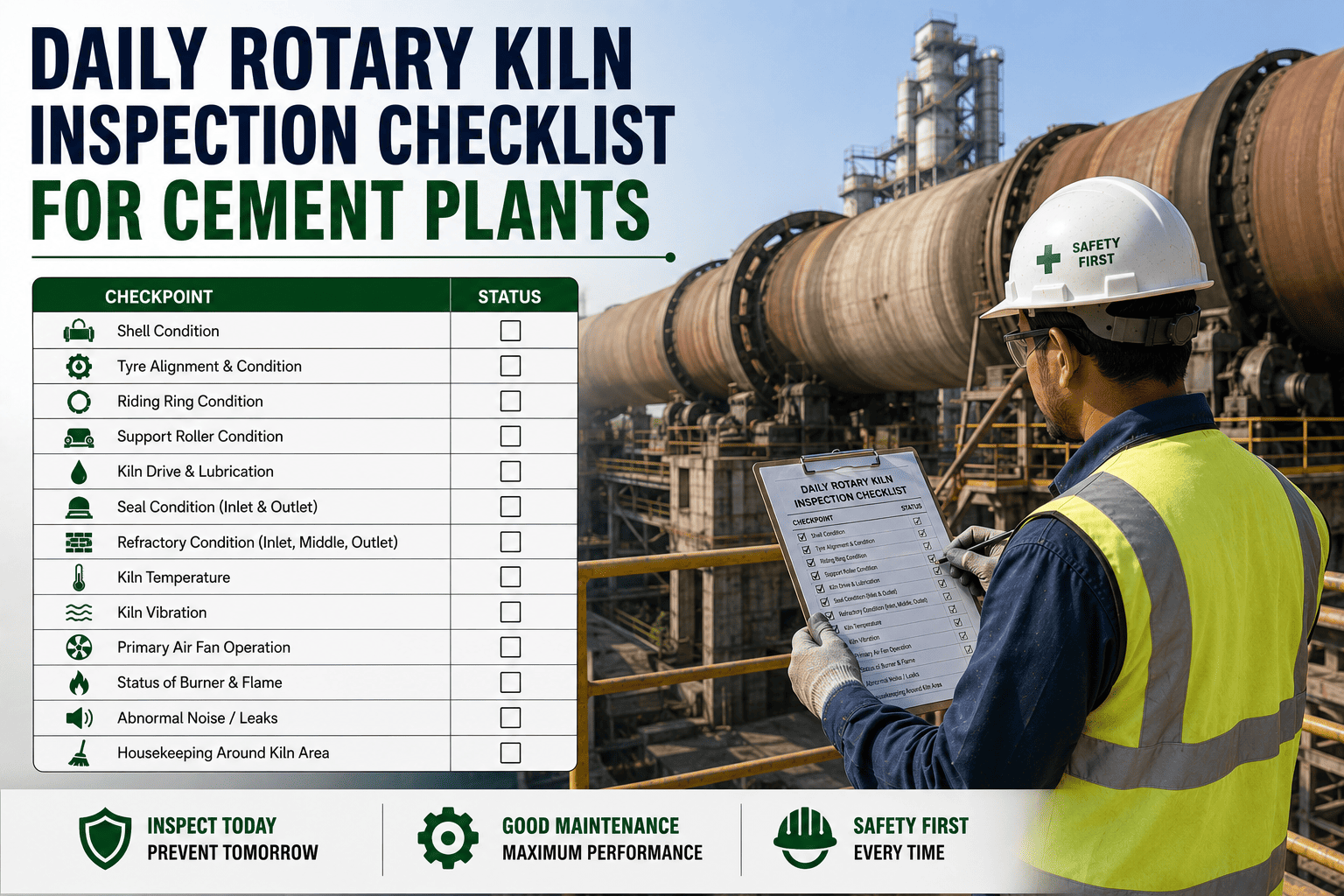
A rotary kiln runs continuously for weeks between planned stops, which means the only real warning before a costly failure often comes from a technician walking the same route every single day and noticing something slightly off. This checklist covers the eight points worth checking on every pass. Sign up to turn this checklist into a recurring digital inspection your team can't skip.
8 Points
Core checks that belong on every daily rotary kiln inspection route
Daily
Minimum frequency recommended given how fast kiln issues can develop
~20 Min
Typical time needed to complete a full walk-around inspection
Zero Skips
Tolerance for missed checks, since early warning signs rarely repeat themselves
Why A Daily Walk Catches What Sensors Miss
Instrumentation catches sudden spikes, but a trained eye and ear catch the slow drift: a slightly louder gear mesh, a tyre wobble that's just starting, a hot spot that wasn't there yesterday. Those early signs are usually the cheapest problems a plant will ever fix.
The Daily Inspection Checklist
Shell Temperature Scan
Infrared scan along the full shell length, looking for hot spots that weren't there on the previous check
Tyre & Support Roller Condition
Check for scoring, uneven wear, or wobble beyond the normal operating range
Girth Gear & Pinion
Inspect the lubrication film and mesh, and listen for any grinding or knocking sound
Bearing Temperature & Vibration
Record readings at each support bearing and compare against the established baseline
Lubrication System
Confirm oil levels, flow rate, and check for any visible leaks around fittings and seals
Refractory Visual Check
Look for any visible signs of lining damage or coating loss from outside the shell
Kiln Drive Motor
Check current draw, motor temperature, and listen for any unusual running sound
Inlet & Outlet Seals
Inspect for excess dust escaping at the seals, which often signals wear or misalignment
Never Miss A Kiln Inspection Again
Oxmaint turns this checklist into a recurring digital route, capturing readings against each point so drift over time is easy to spot. Sign up for a free trial to build your kiln inspection route, or book a demo to see it in action.
What An Abnormal Reading Might Be Telling You
| What You Notice |
Possible Cause |
| Localized hot spot on the shell |
Refractory thinning or coating loss at that specific point |
| Tyre wobble beyond normal range |
Support roller misalignment or a tyre that's starting to wear unevenly |
| Unusual noise from the girth gear |
Lubrication film breaking down or early-stage tooth wear on the gear mesh |
| Rising bearing temperature |
Lubrication failure or early bearing wear that hasn't reached alarm thresholds yet |
Paper Checklist vs A Digital Inspection Route
Paper Checklist
Readings jotted down and filed, hard to compare against last week's numbers
Easy for a busy shift to skip a point without anyone noticing
No trend line until someone manually pulls old sheets together
Digital Inspection Route
Every reading logged against the asset with a timestamp automatically
A skipped point flags itself instead of quietly disappearing
Trend lines build on their own, making slow drift easy to catch early
Where A CMMS Fits Into Daily Kiln Inspections
Oxmaint turns this eight-point checklist into a recurring digital route, capturing each reading against the kiln asset so trends are visible instantly and a missed check never slips through unnoticed.
Frequently Asked Questions
Q
How long does a daily rotary kiln inspection take?
A full walk-around covering all eight points typically takes around twenty minutes, depending on kiln length and how easily each point can be accessed.
Q
Which check on this list matters most?
The shell temperature scan tends to catch the most serious issues earliest, since a new hot spot often points directly to refractory damage that can escalate quickly if left unaddressed.
Q
Can a CMMS turn this checklist into a recurring digital inspection?
Yes, a CMMS can schedule the checklist as a recurring daily route, prompt the technician for each reading, and build a trend history automatically against the kiln asset.
Turn This Checklist Into A Route Your Team Follows Every Day
Oxmaint schedules this eight-point kiln inspection as a recurring digital route, capturing readings and trends automatically. Sign up for a free trial to build your kiln inspection route, or book a demo to see it in action.