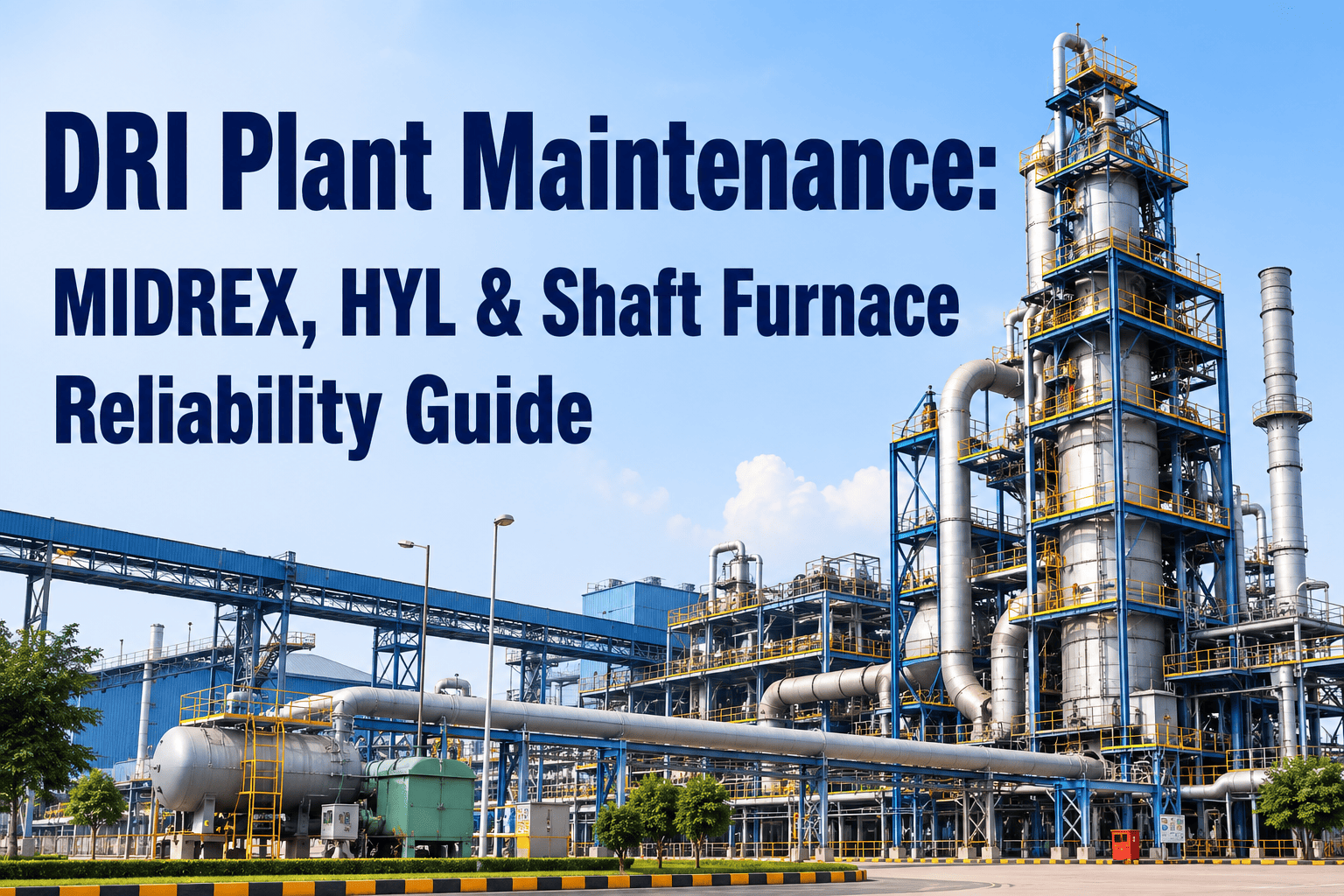
A DRI plant runs on a delicate balance between gas chemistry and heat. Whether it is a MIDREX shaft furnace or an HYL reformer system, the reduction reaction only works within a narrow band of temperature and reducing gas quality, and the equipment that holds that band, burners, reformer tubes, shaft refractory, wears in ways that are easy to miss until metallization drops. Sign up to see how Oxmaint tracks shaft furnace, reformer and gas system assets across your DRI plant in one place.
Gas Quality and Refractory Condition Move Together
Metallization problems in a MIDREX or HYL plant almost always trace back to one of two places, the gas that reduces the ore or the refractory that contains the reaction. A reformer tube developing a hot spot changes reducing gas composition before anyone notices a drop in metallization on the DRI itself. A shaft furnace refractory section thinning from repeated thermal cycling changes the heat profile the burden sees on its way down. Tracking gas chemistry and refractory condition as one connected system, rather than two separate concerns, is what keeps DRI quality consistent.
The Three Systems That Decide DRI Quality
Refractory erosion and burden distribution issues change residence time and heat exposure across the shaft, showing up as inconsistent metallization even when gas quality looks normal.
Tube coking and catalyst degradation gradually reduce reforming efficiency, delivering weaker reducing gas to the shaft furnace long before an alarm typically catches it.
Bustle pipe and tuyere wear disturb even gas flow into the shaft, creating hot and cold pockets that reduce ore unevenly across the furnace cross section.
Inspection Checklist for MIDREX and HYL Systems
Oxmaint registers shaft refractory sections, reformer tubes, catalyst beds and gas distribution components as tracked assets with their own inspection history, so a metallization drop can be traced back to the exact zone or tube that caused it. Sign up for a free trial to see it against your own DRI plant, or book a demo and we will walk through your line.
Reacting to a Metallization Drop vs Catching It Early
Oxmaint tracks shaft furnace refractory zones, reformer tubes, catalyst beds, bustle pipe and discharge components as individual assets, logging inspection readings and wear trends against each one. A reformer tube approaching its creep limit or a refractory section thinning past baseline triggers a work order early, before it ever shows up as a metallization drop. Book a demo to see it mapped against your own MIDREX or HYL plant.
Frequently Asked Questions
Catch Metallization Drift Before It Reaches Finished DRI
Oxmaint gives DRI plant teams shaft refractory tracking, reformer tube monitoring, catalyst condition logs and predictive maintenance across your MIDREX or HYL system. Sign up for a free trial to explore it yourself, or book a demo and we will walk through it against your own plant.