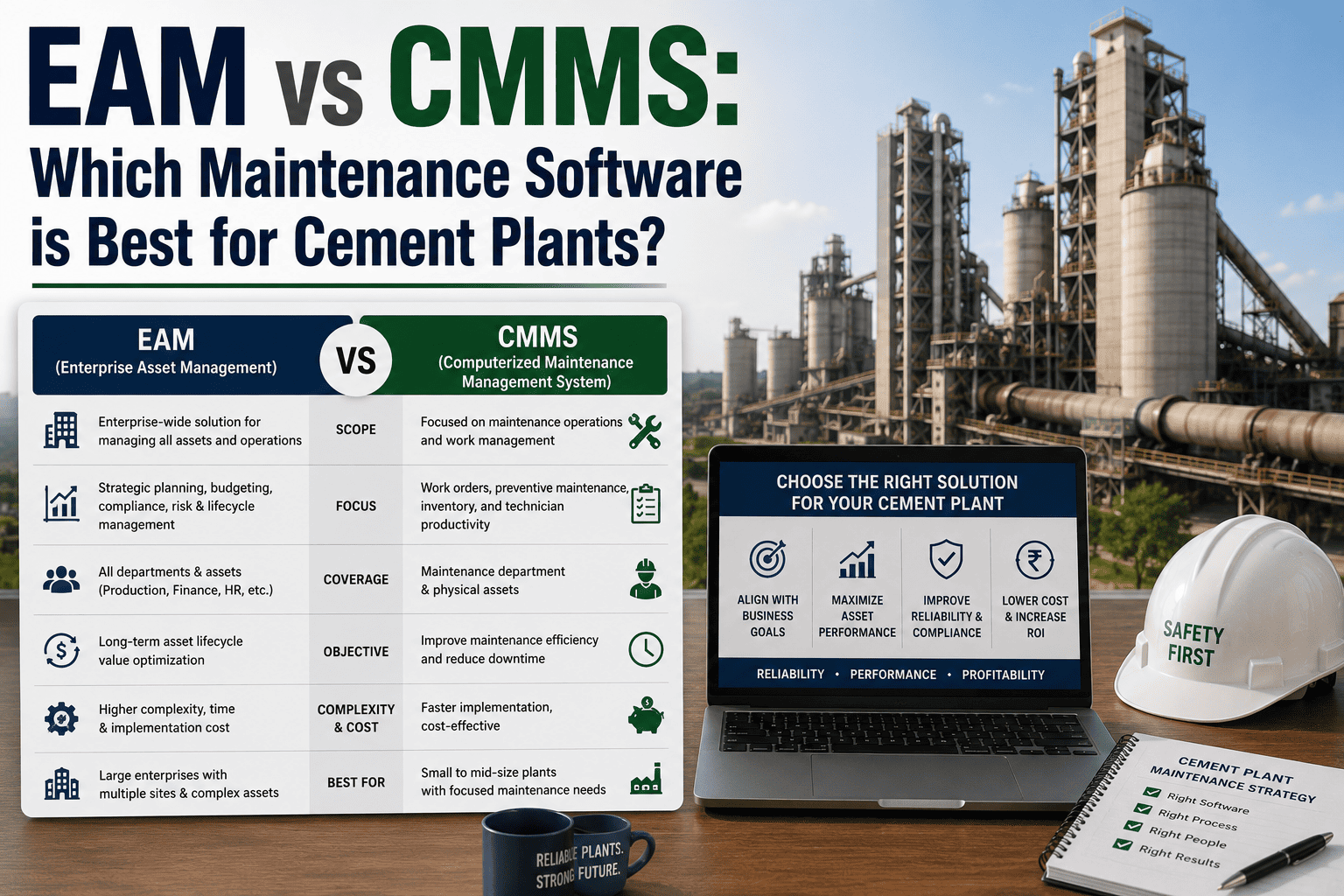
Ask three vendors to explain the difference between EAM and CMMS and you'll likely get three different answers, mostly because the line between them has blurred over the last decade. For a cement plant deciding what to buy, the real question isn't which term is more correct, it's which set of capabilities actually matches your plant's size and complexity. Sign up to see where Oxmaint sits on that spectrum for a single plant or a multi-site group.
CMMS originally meant work orders, PMs, and spare parts, while EAM meant that plus procurement, capital planning, and asset financials. Today most modern CMMS platforms, including plant-focused ones, cover a large share of what used to require a separate EAM, which is why the vendor pitch decks rarely agree on where one ends and the other begins.
EAM vs CMMS: Core Differences
Oxmaint covers work orders, PM scheduling, spare parts, and ERP sync in weeks instead of the months a full EAM rollout takes, without leaving plant teams short on the reporting they actually need. Sign up for a free trial and load your first plant area, or book a demo to see it against your specific requirements.
Which One Actually Fits a Cement Plant
IT wants a system live in weeks, not a year-long enterprise rollout
Maintenance, not corporate asset financials, is the primary pain point
Finance needs depreciation, valuation, and capital planning built into the same system
A long implementation timeline and higher budget are already accounted for
List the three problems maintenance actually struggles with today, whether that's missed PMs, no spare parts visibility, or unclear downtime cost. If ERP already handles asset financials and capital planning, a modern CMMS focused on maintenance execution usually solves the real problem faster and cheaper than a full EAM migration.
Frequently Asked Questions
Get Maintenance Software Scaled to Your Plant, Not an Enterprise You Don't Need
Oxmaint covers work orders, preventive maintenance, spare parts, and ERP integration built for cement plant operations, live in weeks instead of months. Sign up for a free trial and load your first plant area, or book a demo to see it against your actual requirements.