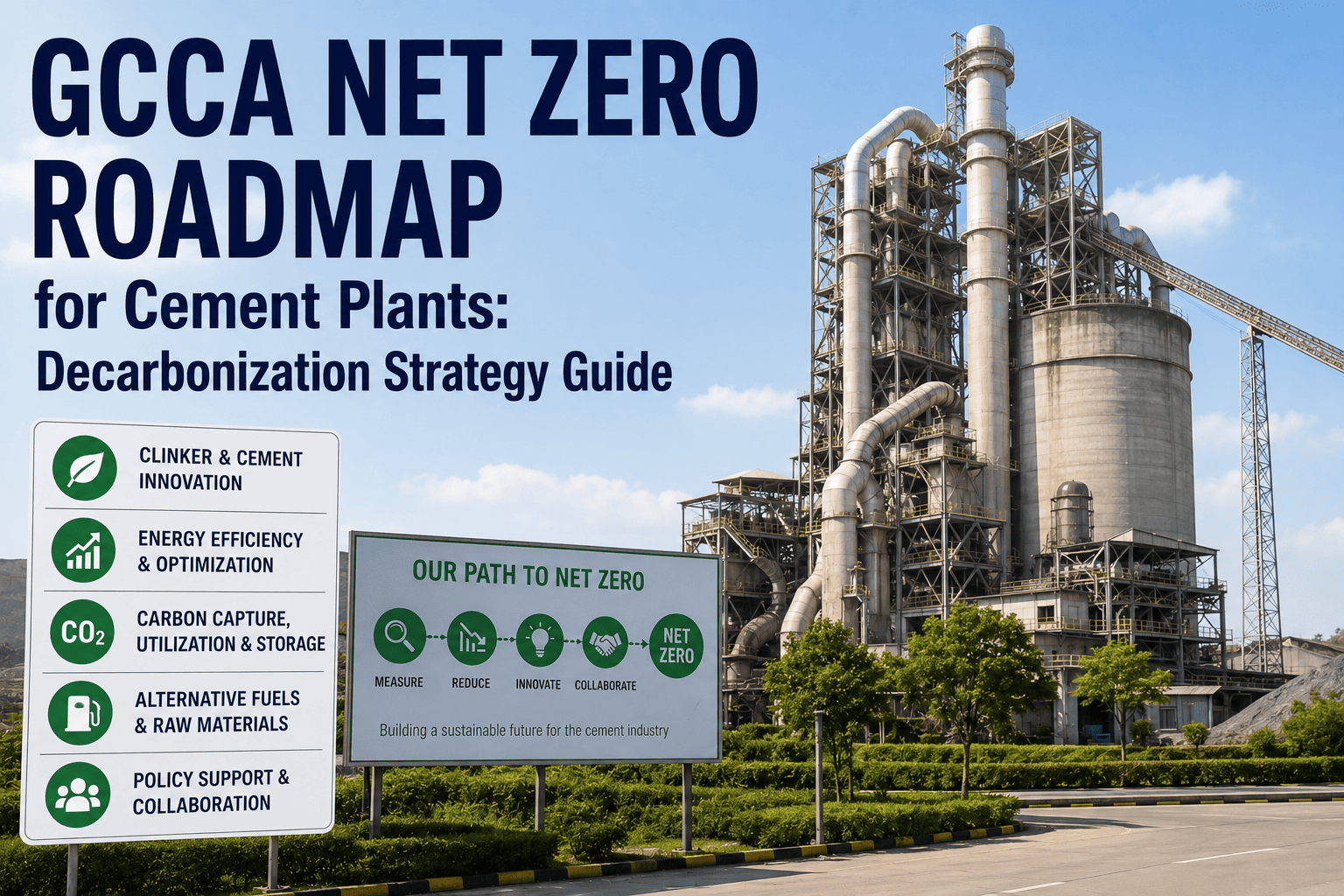
Cement is one of the hardest industries to decarbonize — the chemistry of turning limestone into clinker releases CO2 before a single flame is even lit. The GCCA Net Zero Roadmap is the industry's answer: a structured path that combines clinker reduction, alternative fuels, energy efficiency, and carbon capture to cut emissions without shutting plants down. The hard part isn't agreeing with the roadmap, it's operationalizing it on the plant floor. A CMMS like OxMaint turns each lever into tracked equipment tasks and data — sign up free and your first decarbonization checklist is running today.
The Six Levers of the GCCA Net Zero Roadmap
Clinker Factor Reduction
Replacing part of the clinker in cement with supplementary materials, since clinker chemistry is the single largest emissions source.
Alternative Fuels
Substituting fossil kiln fuel with waste-derived and biomass fuels to lower the carbon intensity of clinker production.
Thermal and Electric Efficiency
Cutting fuel and power use per tonne through better kiln operation, mill efficiency, and heat recovery.
Carbon Capture, Use and Storage
Capturing the CO2 that process chemistry alone cannot avoid, the lever expected to carry most of the load by 2050.
Decarbonizing Power
Shifting purchased electricity toward renewable and low-carbon sources to cut indirect plant emissions.
Novel Cements and Products
Adopting lower-carbon cement chemistries and building designs that use concrete more efficiently.
Where Each Lever Actually Lives on the Plant Floor
Net Zero Maintenance Checklist by Frequency
OxMaint auto-assigns these tasks to your team, with readings and history logged per asset.
Common Decarbonization Gaps and CMMS Prevention
| Gap | Impact | Root Cause | OxMaint Prevention |
|---|---|---|---|
| Inconsistent fuel dosing | Lower fuel substitution rate than planned | No standardized dosing checks | Daily fuel blend logging with deviation alerts |
| Unplanned CEMS downtime | Gaps in emissions reporting | Calibration missed or delayed | Quarterly calibration task with reminders |
| Preheater efficiency drift | Higher fuel use per tonne clinker | Condition not tracked over time | Condition-linked audit checklist |
| Roadmap targets not visible | Progress stalls without notice | No structured reporting cadence | Quarterly roadmap progress dashboard |
| Disconnected sustainability data | Slow ESG and compliance reporting | Maintenance and emissions data siloed | Asset records linking condition to emissions |
| Missed audit findings | Improvement opportunities lost | Findings not tracked to action | Digital audit findings linked to work orders |
OxMaint vs. Competitors
| Capability | OxMaint | MaintainX | UpKeep | Fiix | Limble | IBM Maximo |
|---|---|---|---|---|---|---|
| Clinker factor and fuel tracking | Yes | No | No | No | No | Custom |
| Emissions asset tagging | Yes | No | Limited | Limited | No | Yes |
| Maintenance-to-emissions linkage | Yes | No | No | Limited | No | Custom |
| Roadmap progress dashboard | Yes | Limited | Limited | Limited | Limited | Yes |
| Multi-site fleet view | Yes | Limited | Limited | Yes | Limited | Yes |
| Setup | Minutes | Hours | Hours | Days | Hours | Months |
Implementation Roadmap
Results
Data Security
Frequently Asked Questions
What is the GCCA Net Zero Roadmap?
It is a framework from the Global Cement and Concrete Association outlining the levers the industry will use to reach net zero emissions by 2050, including clinker reduction, alternative fuels, efficiency, and carbon capture.
Which lever carries the most weight by 2050?
Carbon capture, use and storage is expected to account for the largest share of emissions reduction once the other levers reach their practical limits.
How does maintenance connect to decarbonization?
Worn burners, inefficient fans, and uncalibrated emissions monitors all quietly work against roadmap targets, so tracking equipment condition alongside each lever helps catch losses early.
Can OxMaint support net zero tracking across multiple plants?
Yes. OxMaint provides one dashboard across every plant with asset-specific decarbonization checklists, lever tracking, and portfolio-wide reporting.