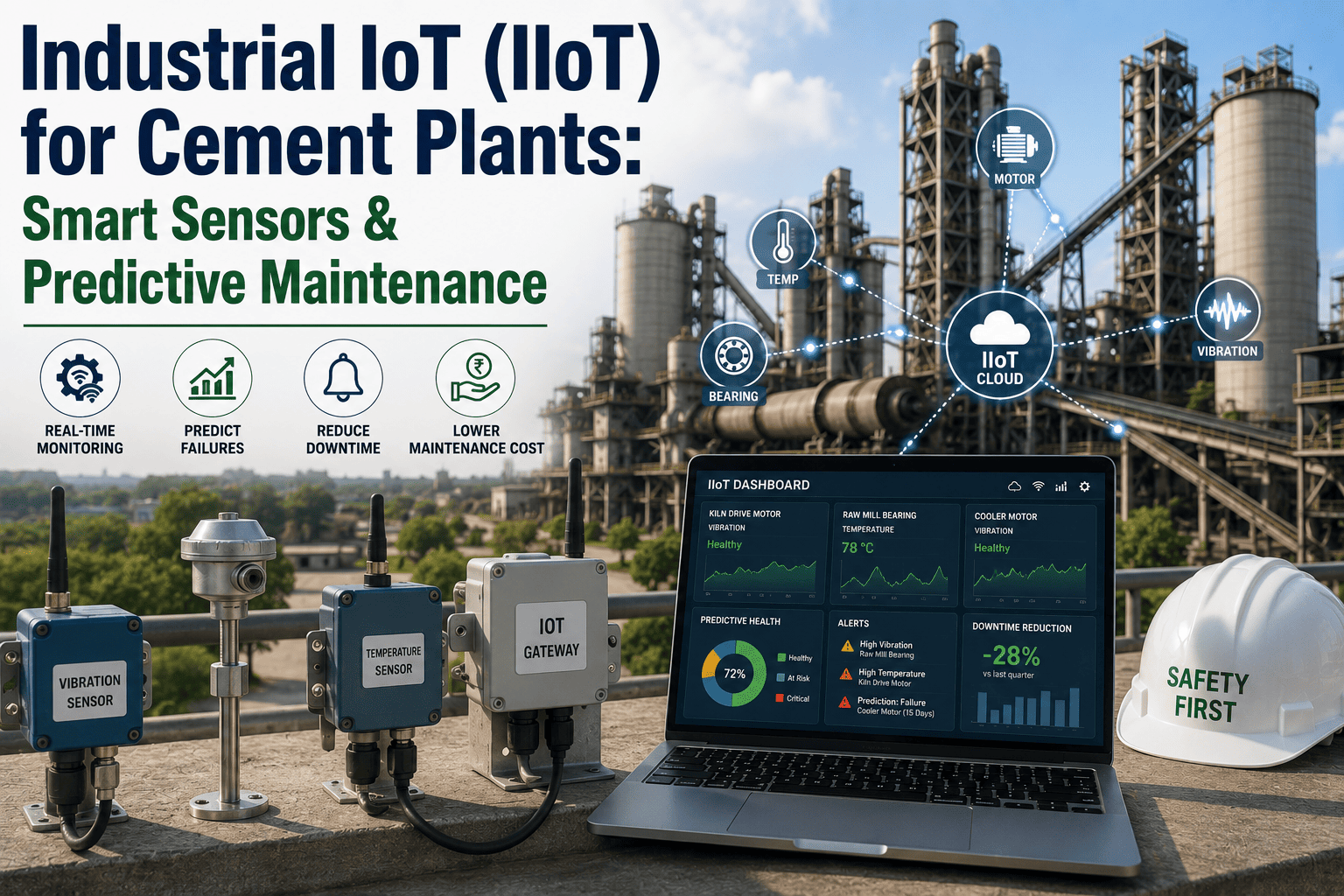
A bearing on a raw mill fan doesn't fail suddenly, it tells you weeks in advance through a slow rise in vibration and temperature that no human walks past often enough to catch. Industrial IoT sensors are built to notice that rise the moment it starts, not after a technician happens to be nearby with a handheld reader. Sign up to see how Oxmaint turns sensor readings into work orders automatically.
3 Sensor Types
Vibration, temperature, and acoustic sensors cover most rotating equipment failure modes
3-5 yrs
Typical battery life of a wireless vibration sensor at standard sampling rates
2-8 wks
Typical warning window a bearing gives before failure once monitored continuously
1-2 wks
Time to install and connect a first batch of wireless sensors on critical rotating assets
The Gap Between Inspection Rounds
A technician walking a manual vibration route once a week only ever sees a snapshot, and a lot can change on a mill fan or kiln support bearing between visits. Wireless sensors close that gap by sampling continuously, so a slow trend toward failure gets caught on day three instead of day twenty.
Sensor Types and What They Monitor
| Sensor Type |
What It Detects |
Best Suited For |
| Vibration sensors |
Bearing wear, misalignment, and imbalance |
Fans, motors, and mill drive components |
| Temperature sensors |
Bearing overheating and lubrication breakdown |
Kiln support rollers, gearboxes, and motor windings |
| Acoustic sensors |
Compressed air leaks and early-stage bearing defects |
Compressor rooms and enclosed gearbox housings |
| Current sensors |
Motor load trends and developing electrical faults |
Crusher motors, mill drives, and conveyor drives |
Sensor Data Is Only Useful If It Becomes a Work Order
Oxmaint ingests vibration, temperature, and current readings directly against each asset record, converting a sustained threshold breach into a prioritized work order with the trend attached. Sign up for a free trial and connect your first sensor feed, or book a demo to see it running on a real asset.
How Sensor Data Reaches a Work Order
| Layer |
What Happens Here |
| Sensor |
A battery-powered wireless device samples vibration, temperature, or current at the asset |
| Gateway |
A local gateway collects readings over a low-power wireless protocol and forwards them onward |
| Cloud analytics |
Readings are compared against a baseline to flag sustained deviations, not single spikes |
| CMMS |
A confirmed deviation becomes a prioritized work order with the trend history attached |
Time-Based PM vs IIoT-Driven Condition Monitoring
Time-Based Preventive Maintenance
Bearings are replaced on a fixed schedule whether they need it or not
A failure between scheduled inspection rounds goes unnoticed until it's severe
Healthy components are sometimes serviced early, wasting parts and labor
IIoT-Driven Condition Monitoring
Components are serviced based on actual measured condition, not a fixed calendar
A developing bearing fault is caught within days of the trend starting
Parts and labor are spent only when the data shows a real need
Where to Start Deploying Sensors
Prioritize the rotating equipment with the highest failure cost and the least existing visibility, typically raw mill fans, kiln support bearings, and crusher motors, before expanding sensor coverage to secondary equipment once the first deployment proves out the workflow.
Frequently Asked Questions
Q
Do wireless sensors need plant network cabling?
No. Most industrial wireless sensors communicate with a local gateway over a low-power protocol, and only the gateway needs a connection back to the network, which keeps installation fast and avoids running cable across the plant floor.
Q
Does IIoT replace preventive maintenance entirely?
Not entirely. Condition monitoring is strongest for gradually developing failures like bearing wear, while some tasks, such as lubrication or safety checks, still make sense on a fixed schedule regardless of what the sensor data shows.
Q
How does sensor data end up as a work order?
A CMMS connected to the sensor platform compares readings against a set threshold, and once a deviation is sustained rather than a brief spike, it automatically opens a work order against the asset with the recent trend data attached.
Turn Sensor Trends Into Action Before a Bearing Fails
Oxmaint connects vibration, temperature, and current sensor data directly to asset records, converting a sustained deviation into a prioritized work order automatically. Sign up for a free trial and connect your first sensor feed, or book a demo to see it running on a real asset.
Industrial IoT