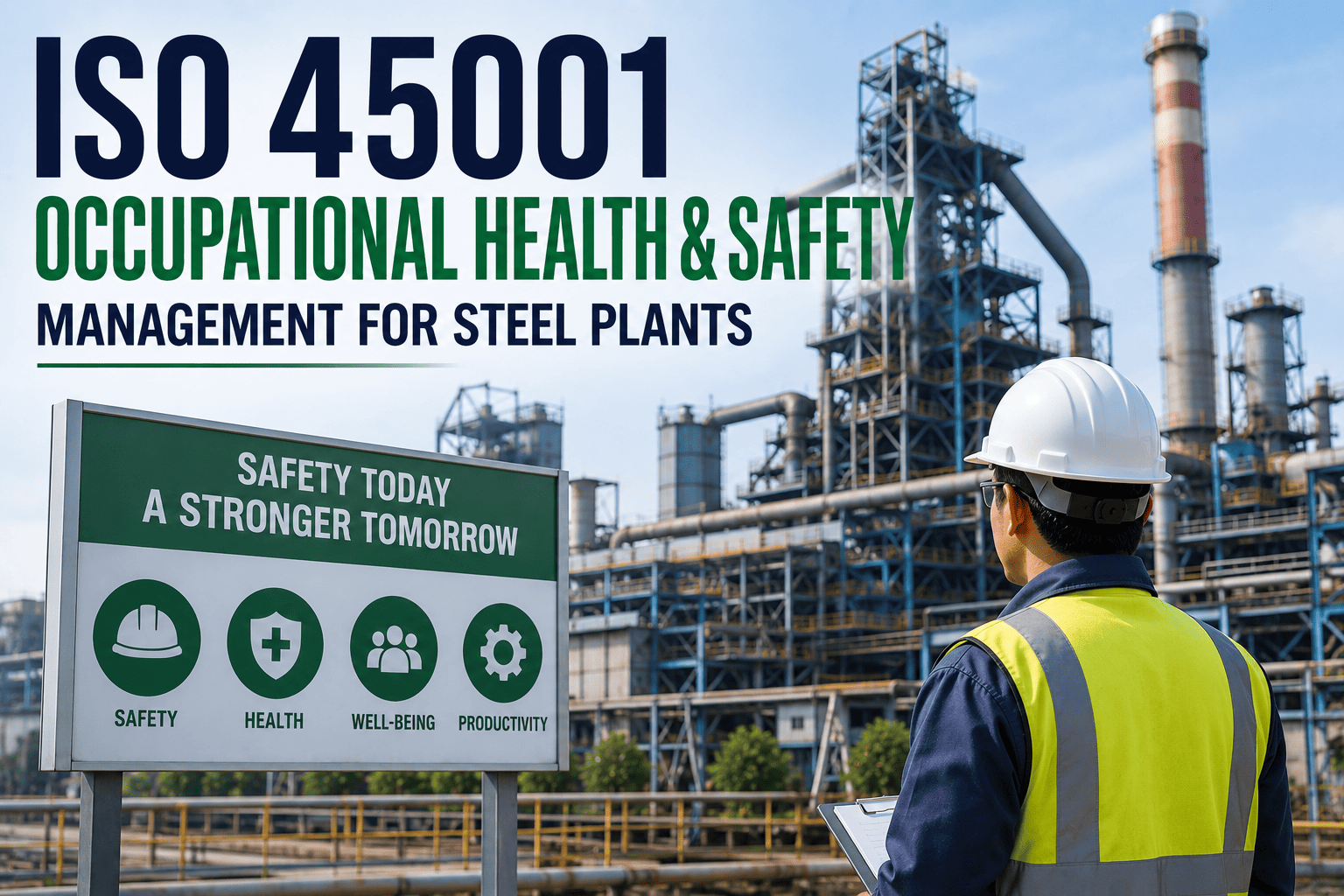
Molten metal, overhead cranes, and heavy rolling equipment make steel production one of the highest-risk manufacturing environments there is. ISO 45001 doesn't just ask for a safety policy on the wall — it requires a working system that identifies hazards before they cause harm, investigates incidents thoroughly, and can prove workers were actually consulted along the way. Auditors dig into records, not intentions. A CMMS like OxMaint turns hazard tracking, inspections, and incident records into one auditable system — sign up free and your first safety checklist is running today.
Core Elements of an ISO 45001 OHSMS
Hazard Identification
Systematic identification of hazards across every process area, from molten metal to material handling, before they cause harm.
Risk Assessment
Structured evaluation of hazard likelihood and severity, used to prioritize which controls get implemented first.
Worker Participation and Consultation
Documented mechanisms for workers to raise concerns and contribute to hazard identification and control decisions.
Incident Investigation
Root cause analysis of incidents and near misses, with corrective actions tracked through to closure.
Emergency Preparedness
Documented response plans and drills for fire, chemical release, and equipment failure scenarios specific to steel operations.
Management Review
Periodic leadership review of safety performance and system effectiveness, closing the loop for continual improvement.
High-Risk Areas in a Steel Plant
Safety Checklist by Frequency
OxMaint auto-assigns these tasks to your team, with sign-off and corrective action tracking per hazard.
Common OHSMS Gaps and CMMS Prevention
| Gap | Risk | Root Cause | OxMaint Prevention |
|---|---|---|---|
| Unlogged hazards | Incidents from known but unaddressed risks | No structured identification process | Weekly hazard log checklist with mandatory fields |
| Incomplete incident investigation | Repeat incidents from unresolved causes | No tracked root cause process | Per-incident investigation template with sign-off |
| Missing worker consultation records | Nonconformance at audit | No centralized consultation log | Monthly consultation checklist with history |
| Outdated risk assessments | Controls no longer match actual risk | No scheduled review cycle | Quarterly risk assessment refresh task |
| Skipped emergency drills | Poor real-event response | No structured drill calendar | Quarterly drill scheduling with completion tracking |
| Scattered safety records | Slow, stressful audit prep | No single evidence repository | Centralized safety record system per hazard area |
OxMaint vs. Competitors
| Capability | OxMaint | MaintainX | UpKeep | Fiix | Limble | IBM Maximo |
|---|---|---|---|---|---|---|
| Hazard identification templates | Yes | Limited | Limited | No | Limited | Custom |
| Incident investigation workflows | Yes | Limited | Limited | Limited | Limited | Yes |
| Worker consultation tracking | Yes | No | No | No | No | Custom |
| Emergency drill scheduling | Yes | Limited | Limited | Limited | Limited | Yes |
| Multi-site fleet view | Yes | Limited | Limited | Yes | Limited | Yes |
| Setup | Minutes | Hours | Hours | Days | Hours | Months |
Implementation Roadmap
Results
Data Security
Frequently Asked Questions
What does ISO 45001 require beyond a written safety policy?
It requires a working system with documented hazard identification, risk assessment, worker consultation, and incident investigation, all backed by real records.
Why does worker participation matter for certification?
Auditors specifically check for evidence that workers were consulted on hazards and controls, since frontline input often catches risks management alone would miss.
How often should risk assessments be reviewed?
A quarterly refresh is typical, though any process change, new equipment, or incident should trigger an assessment update outside that cycle.
Can OxMaint support ISO 45001 across multiple steel plants?
Yes. OxMaint provides one dashboard across every site with hazard-specific checklists, incident tracking, and portfolio-wide reporting.