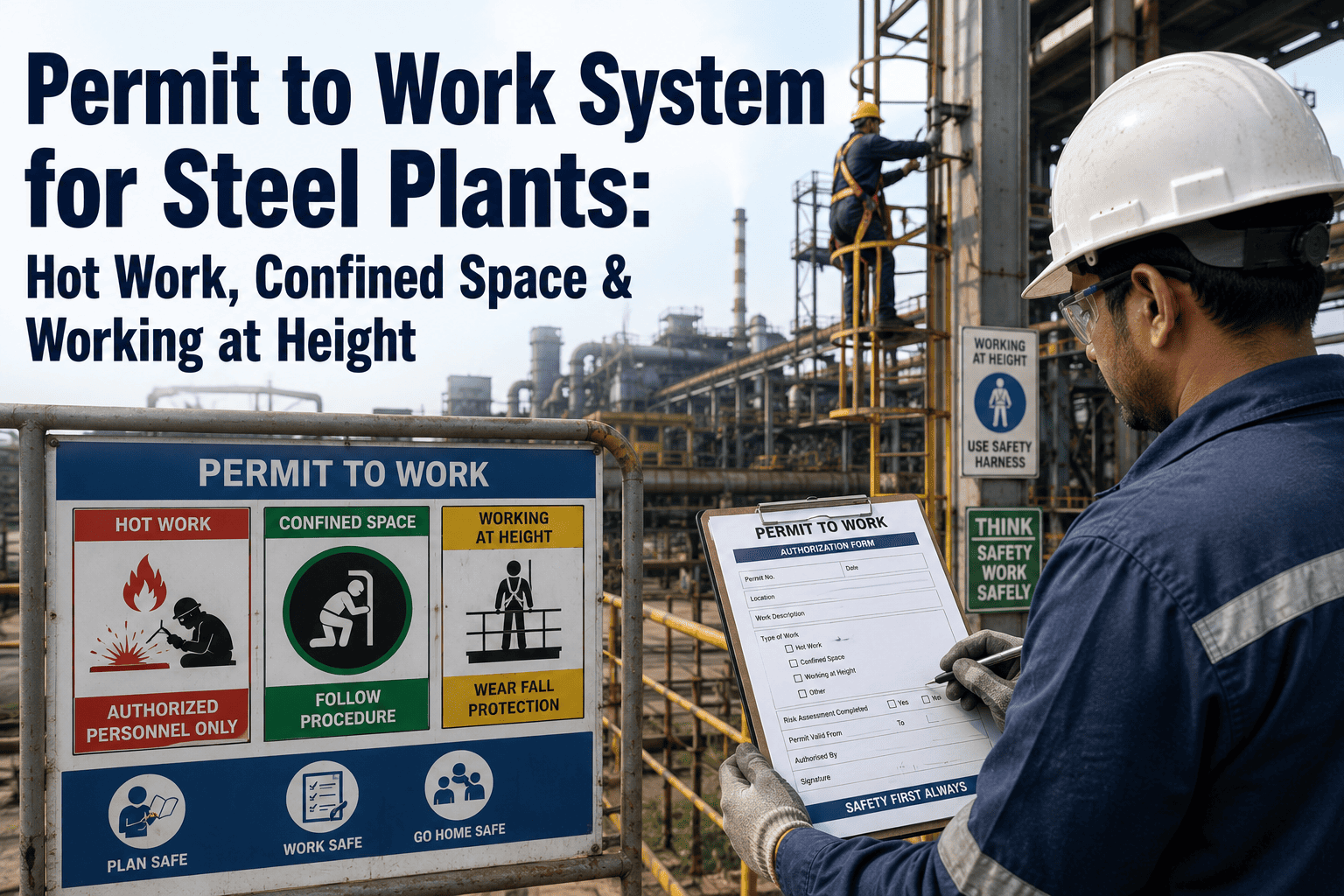
Welding near a coolant line, climbing a furnace platform, or entering a dust collector aren't the same job with different tools, they're different risks entirely. A single generic "work permit" treats all three the same way, and that's exactly how a hazard gets missed. Sign up to see how Oxmaint builds the right permit checklist for the actual job, not a one-size-fits-all form.
3 Core Types
Hot work, confined space, and working at height cover most high-risk steel plant tasks
Fire Watch
Required to stay in place well after hot work ends, since smoldering material can ignite later
Continuous
Atmospheric monitoring needed throughout confined space entry, not just before entering
Time-Bound
Every permit should expire with the shift or task, so conditions get reassessed before renewal
Why a Generic Work Permit Isn't Enough
A generic permit form gets filled out quickly, which is exactly the problem. Hot work needs a fire watch and gas testing. Confined space needs continuous atmospheric monitoring and a standby attendant with a rescue plan. Working at height needs fall protection and a weather check. Collapsing all three into one checklist means the specific controls that actually prevent an incident get treated as optional boxes instead of required steps.
Three Permit Types, Three Very Different Hazards
| Permit Type |
Primary Hazard |
Non-Negotiable Control |
| Hot work |
Sparks or heat igniting nearby combustible material |
Fire watch present during and after the work is done |
| Confined space entry |
Oxygen deficiency, toxic gas, or engulfment |
Continuous gas monitoring and a standby attendant |
| Working at height |
Falls from platforms, ladders, or elevated equipment |
Inspected fall protection anchored to a rated point |
The Right Checklist for the Actual Job, Every Time
Oxmaint generates the correct permit checklist automatically based on the task type, so a hot work job gets fire watch requirements and a confined space entry gets gas testing steps, not a generic form. Sign up for a free trial to build your first permit template, or book a demo and we'll walk through your current permit process.
What Makes a Permit Actually Valid, Not Just Signed
| Element |
Why It's Required |
| Hazard identification |
Names the specific risks of that job, not a generic assumption |
| Required controls |
Fire watch, gas testing, or fall protection matched to the hazard |
| Named responsible people |
Clear accountability for who checked what before work began |
| Fixed expiry time |
Forces reassessment instead of a permit quietly running for days |
Paper Permits vs a Digital Permit System
Paper Permit System
Same generic form used regardless of the actual task
No automatic expiry, can sit "active" long after conditions changed
Hard to prove who approved what when an incident is reviewed
Digital Permit System
Checklist automatically matches the permit to the actual hazard type
Expires on its own, forcing a fresh review before renewal
Full approval trail timestamped and searchable for any review
How Oxmaint Supports Permit to Work Management
Oxmaint generates hot work, confined space, and working at height permits with the right checklist for each, ties them directly to the work order, and enforces expiry so a permit can't quietly stay active past its window. Every approval is logged with a name and a timestamp, ready to produce if a review or audit ever asks for it. Book a demo to see it set up against your own permit categories.
Frequently Asked Questions
Q
How long should a confined space permit stay valid before re-testing?
Atmospheric conditions can change quickly, so most plants require continuous or frequent periodic monitoring for the duration of entry, with the permit itself typically limited to a single shift before it needs reassessment.
Q
Why does a fire watch need to stay after hot work is finished?
Sparks or heat can smolder in hidden material for well over half an hour before igniting into a visible fire. A fire watch staying in place after the work stops catches that delayed ignition before it spreads.
Q
Can one task need more than one type of permit at the same time?
Yes, and it's common. Welding inside an elevated confined space, for example, could require hot work, confined space entry, and working at height permits all active together, each with its own controls in place.
Q
Who should have authority to approve and close out a permit?
Approval should sit with someone trained on that specific hazard type, not just any available supervisor. Closeout should confirm the area is safe and controls have been removed, not just that the task is finished.
Match Every Permit to the Hazard It's Actually For
Oxmaint gives steel plant teams hot work, confined space, and working at height permit templates, automatic expiry, and a full timestamped approval trail in one system. Sign up for a free trial to build your first permit template, or book a demo and we'll walk through it against your own safety process.