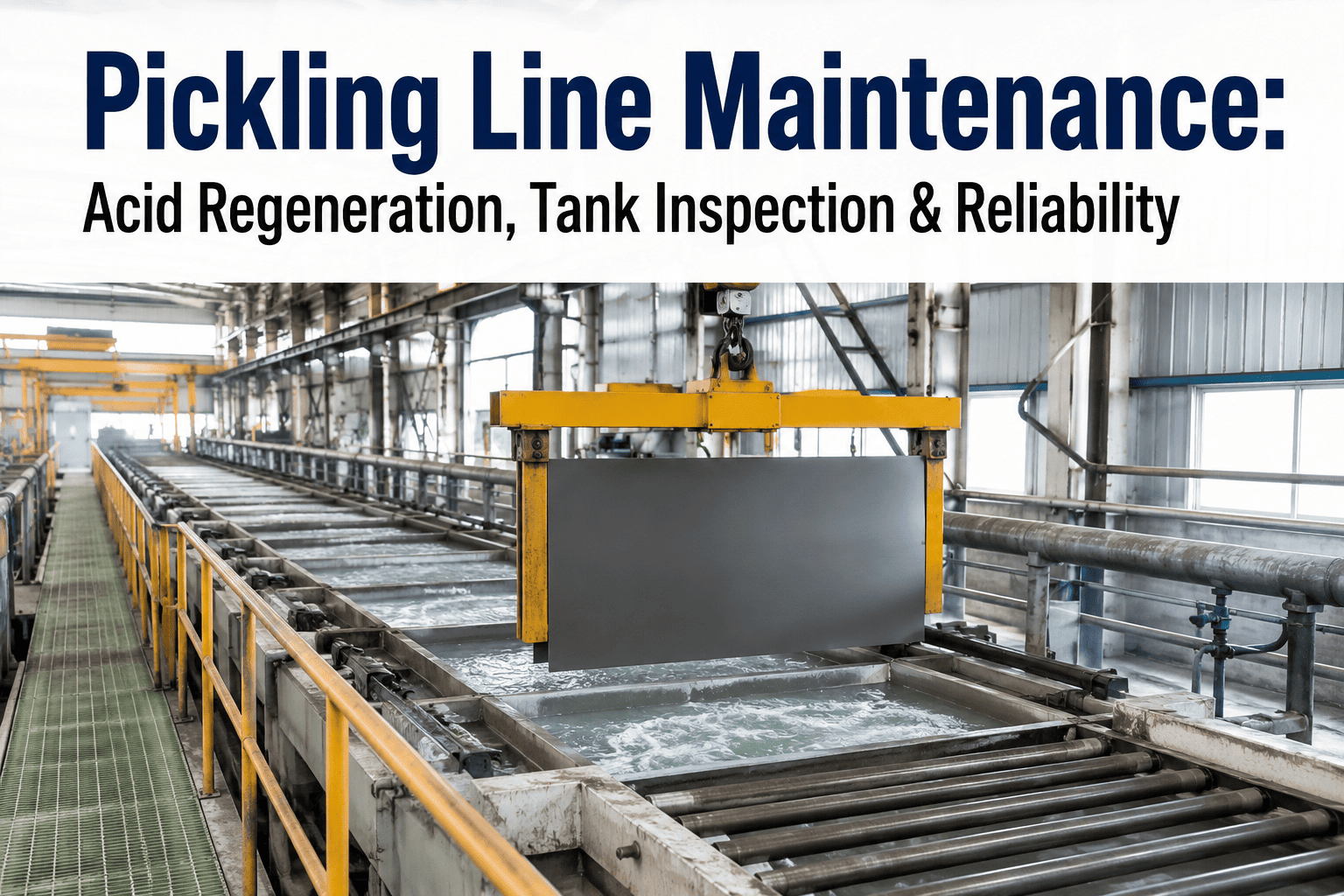
A pickling line runs strip through acid concentrations strong enough to strip scale off steel in seconds, which means every tank, rubber lining and rinse header on the line is fighting corrosion around the clock. Miss a lining crack or let acid concentration drift and the next problem isn't a maintenance ticket, it's a leak, a compliance gap, or a coil that fails inspection. Sign up for a free trial to see how Oxmaint tracks acid regeneration and tank reliability across your pickling line.
10-18%
Typical hydrochloric acid concentration steel pickling lines run to strip scale
77-88°C
Bath temperature range HCl pickling tanks are held at for effective scale removal
93°C
Temperature above which rubber tank linings age prematurely and need closer tracking
2 Years
Minimum retention period for scrubber emission records under NESHAP Subpart CCC
Why Tank Integrity Is the Real Bottleneck
A pickling tank doesn't fail all at once, it fails one worn spot at a time, usually where a pipe rubs the lining or a thermocouple stops reporting true temperature. Once acid finds bare steel through a cracked lining, the damage moves fast, and the fix stops being a maintenance job and becomes an unplanned shutdown with an environmental report attached. Tracking lining condition against temperature and age is what keeps that failure on a planned schedule instead.
HCl Pickling vs H2SO4 Pickling: What Changes for Maintenance
Hydrochloric Acid (HCl) Lines
Runs faster and at lower cost, but the acid fumes demand scrubber systems under strict NESHAP monitoring and two-year record retention.
Sulfuric Acid (H2SO4) Lines
Runs at elevated temperatures that push rubber linings harder, so thermocouple accuracy and lining thickness checks matter even more here.
Track Every Tank Lining and Scrubber Record in One Place
Oxmaint logs rubber lining inspections, acid concentration checks and scrubber compliance data as permanent asset history, ready to export the moment a regulator asks. Sign up for a free trial to start tracking your own pickling line data, or book a demo and we'll walk through your acid regeneration reliability program.
Three Checks That Prevent Most Rubber Lining Failures
| Check |
Why It Matters |
| Thermocouple accuracy |
A drifting sensor lets bath temperature creep past the lining's safe limit without anyone noticing until damage is already done |
| Pipe and fitting clearance |
Pipes resting directly on rubber lining chafe through it from vibration, opening a path straight to bare steel |
| Cover handling records |
A rushed crane lift on a tank cover can distort the shell and crack the lining underneath before the tank even goes back into service |
Scrubber Compliance Is a Maintenance Job, Not Just a Paperwork Job
Under federal air emission rules for HCl pickling, scrubber packing, recirculation pumps and liquid distribution systems all need mechanical upkeep on the same footing as emission monitoring records. Treating scrubber PM and compliance documentation as one combined program, rather than two separate systems, is what keeps an audit request from turning into a scramble.
Frequently Asked Questions
Q
How can a team catch a rubber lining problem before it leaks?
Regular thickness checks at known wear points, combined with a temperature log that flags any reading near the lining's safe limit, catch most lining problems while they're still a patch job instead of a full re-lining.
Q
What happens to acid once it's spent in the pickling tank?
Spent liquor carrying dissolved iron chloride or iron sulfate gets pumped to a regeneration plant, where it's processed back into usable acid and iron oxide byproduct rather than treated as waste, which keeps both cost and disposal volume down.
Q
How long do scrubber emission records need to be kept?
Under NESHAP Subpart CCC, facilities using HCl for pickling must retain scrubber performance and outlet emission records for at least two years in an accessible format, ready to produce for a regulatory request at any time.
Q
Why does acid concentration need constant monitoring instead of periodic checks?
Concentration that drifts too low leaves scale on the strip, and concentration that runs too high accelerates both base metal loss and lining wear, so the safe operating window is narrower than a once-a-shift check can reliably hold.
Keep Your Pickling Line Compliant and Running
Oxmaint gives steel plant teams acid concentration monitoring, rubber lining tracking, scrubber compliance records and regeneration plant maintenance in one platform built for pickling line reliability. Sign up for a free trial to explore it yourself, or book a demo and we'll walk through it against your own acid regeneration operation.