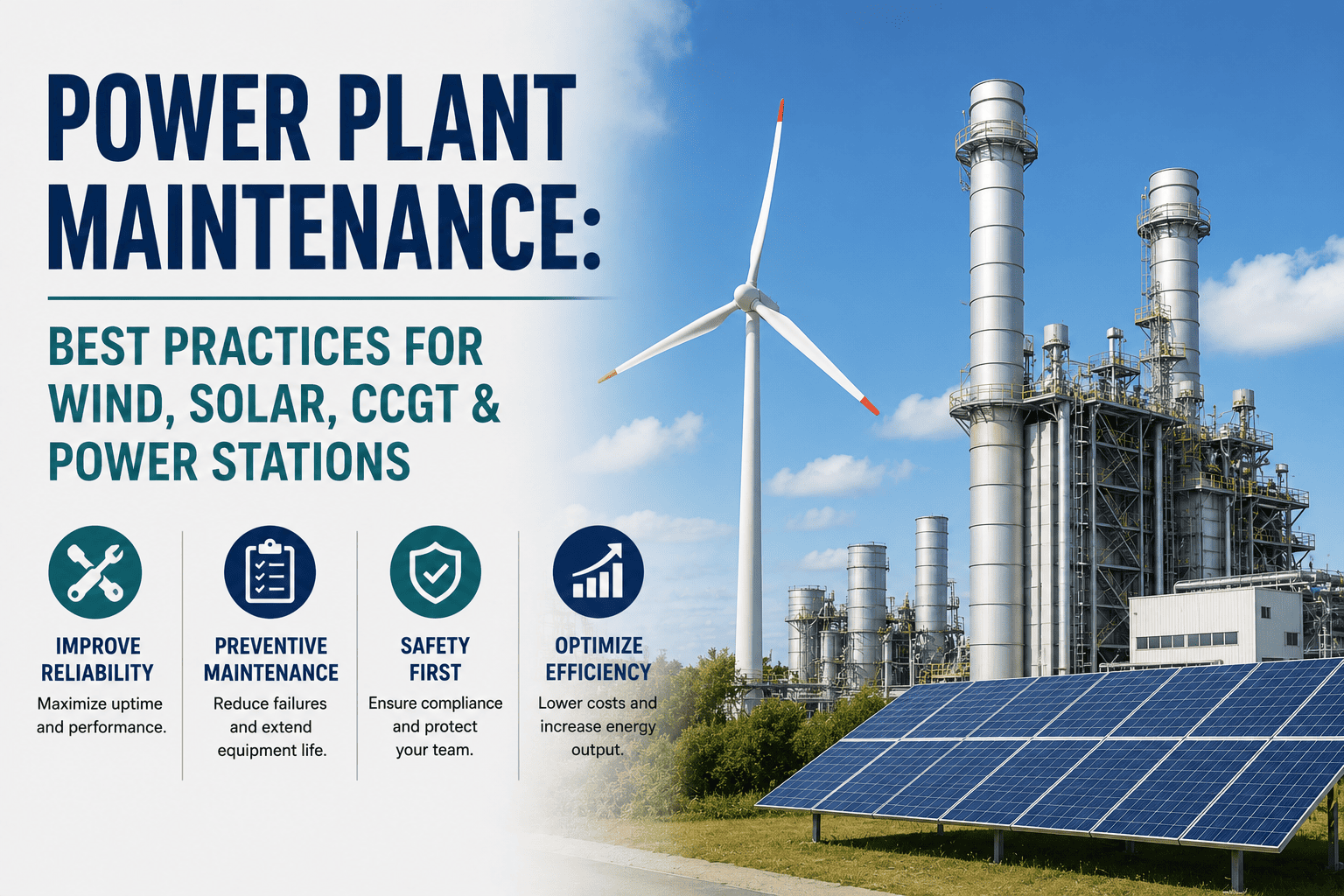
A wind farm, a CCGT station and a biomass plant have almost nothing in common mechanically, yet they're often managed by the same operations team, on the same spreadsheet, with the same three-ring binder for compliance evidence. The UK's generation mix means most power operators are no longer running one type of asset, they're running five. A CMMS like OxMaint gives every generation type its own maintenance logic, in one system, instead of five disconnected ones.
One Maintenance System for Every Generation Type
Track wind, solar, CCGT, biomass and nuclear assets with the interval logic each one actually needs.
How Maintenance Differs Across the Generation Mix
Wind Turbines
Gearbox oil analysis, blade inspection and vibration monitoring, weighted heavily toward condition-based work offshore.
Solar PV
Panel soiling, string-level output checks and inverter servicing, driven by performance ratio rather than fixed calendar dates.
CCGT
Combustion, hot gas path and major overhaul intervals driven by equivalent operating hours and factored starts, not the clock.
Biomass
Fuel handling wear, boiler tube inspection and ash system upkeep, shaped by fuel quality as much as by run hours.
Nuclear
Outage-based inspection under strict regulatory oversight, where every task needs a documented, auditable trail.
Balance of Plant & Storage
Transformers, switchgear and battery storage systems that sit behind every generation type and are just as easy to overlook.
What Drives the Maintenance Clock, By Generation Type
| Generation Type | Primary Maintenance Driver | Typical Interval |
|---|---|---|
| Wind (Onshore) | Calendar plus condition monitoring | 6 to 12 months |
| Wind (Offshore) | Predictive monitoring, campaign visits | Condition-triggered |
| Solar PV | Performance ratio, soiling levels | Quarterly to seasonal |
| CCGT | Equivalent operating hours, factored starts | 8,000 to 24,000 EOH |
| Biomass | Fuel throughput, boiler tube condition | Run-hour and seasonal |
| Nuclear | Regulatory outage schedule | Outage-cycle driven |
Before, During and After a Planned Outage
Build the Full Scope From Condition Data
Pull vibration trends, oil analysis and inspection findings so the outage plan targets what actually needs work.
Track Every Task Against the Window
Log completed work, parts used and findings in real time so nothing slips once the unit is back on load.
Feed Findings Into the Next Cycle
Extended intervals, flagged components and deferred items carry forward into the next planning cycle automatically.
Power Plant Maintenance Maturity
Reactive by Generation Type
Each site or asset class runs its own paperwork, and failures are found after they've already cost generation.
Calendar-Based Across the Fleet
Fixed schedules cover the basics, but intervals don't reflect actual condition, fuel quality or fired hours.
Condition-Driven, One System
Every generation type runs on its own interval logic, inside a single platform the whole operations team can see.
Why a Mixed Fleet Needs One System, Not Five
A generation mix portfolio fails quietly when each asset type is tracked its own way. A CCGT running on equivalent operating hours, a wind farm running on vibration thresholds and a solar array running on performance ratio all need different triggers, but the operations team still needs one view of what's due, what's overdue and what's been deferred. Power operators who stay ahead aren't running five separate systems, they're running interval logic built for each technology inside one platform. Sign up free to set up your own generation mix, or book a demo to see how power operators manage wind, solar, CCGT, biomass and nuclear assets side by side.
Built for Every Technology in Your Fleet
Give every generation type the interval logic it needs, tracked in one connected system.
Frequently Asked Questions
Why does maintenance strategy differ so much between wind, solar and CCGT?
Each technology degrades differently. Wind turbines wear through vibration and fatigue, solar output drops through soiling and inverter loss, and CCGT components wear by equivalent operating hours, so each needs its own trigger rather than a shared calendar date.
Is predictive maintenance worth it for onshore wind, or only offshore?
Offshore sites lean on predictive monitoring because access is limited by weather and vessels, but onshore sites benefit too, since combining condition monitoring with scheduled visits still catches developing faults earlier than a fixed checklist alone.
What are equivalent operating hours and why do CCGT plants track them?
Equivalent operating hours weight starts, cycling and peak load more heavily than steady running, since these events age turbine components faster than run time alone. Tracking clock hours only can leave a plant entering an outage with less real component life than expected.
How is nuclear plant maintenance different from other generation types?
Nuclear maintenance is built around planned outage cycles under strict regulatory oversight, where every task needs a documented, auditable trail, rather than the condition-based flexibility used on wind or solar assets.
Can one CMMS realistically manage a mixed generation portfolio?
Yes, provided it supports different interval logic per asset type, such as run-hours for CCGT, condition thresholds for wind and performance ratio for solar, all reporting into a single maintenance view for the operations team.