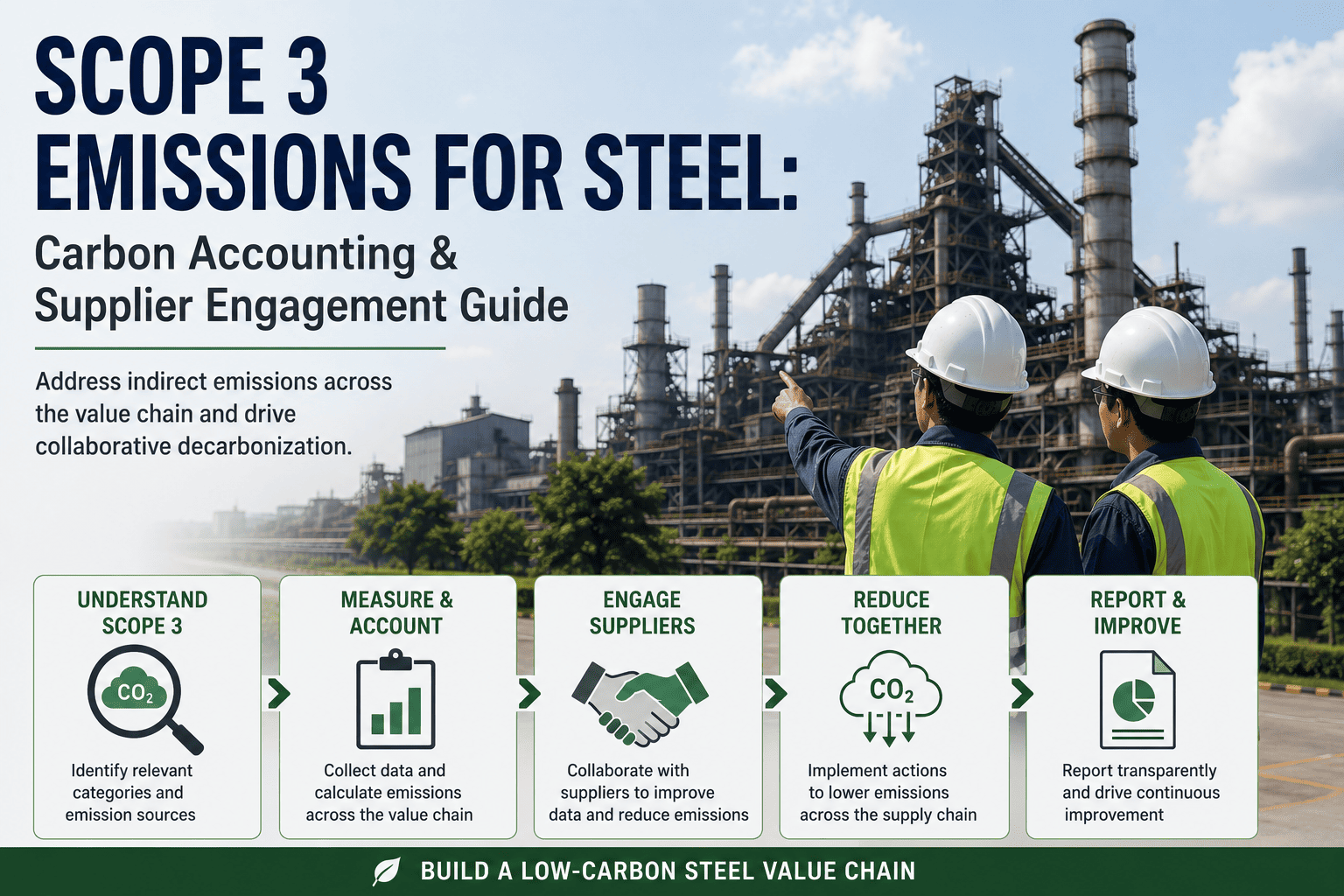
A steel producer's own furnace emissions are often the smallest part of its real carbon footprint. Scope 3 covers everything upstream and downstream — the iron ore and scrap that arrive by rail, the fuel burned getting them there, and what happens to the finished product once it leaves the gate. Customers, investors, and regulators are all asking for this data now, and without supplier-level visibility, most producers end up reporting rough estimates instead of real numbers. A CMMS like OxMaint ties supplier data collection and emissions tracking into one auditable workflow — sign up free and your first Scope 3 tracking checklist is running today.
The Scope 3 Categories That Matter Most for Steel
Purchased Raw Materials
Emissions embedded in iron ore, scrap, alloys, and other inputs before they even reach the plant gate.
Upstream Transportation
Rail, ship, and truck emissions from moving raw materials from source to facility, often underestimated without carrier data.
Fuel and Energy Related Activities
Upstream emissions from extracting and transporting the fuels and electricity the plant consumes, beyond direct combustion.
Downstream Transportation
Emissions from shipping finished steel to customers, distributors, and processing facilities after it leaves the plant.
Use of Sold Products
Emissions generated by customers using or processing the steel further, estimated using industry-standard use profiles.
End-of-Life Treatment
Emissions tied to recycling or disposal of steel products at the end of their useful life, a category where steel typically performs well.
Supplier Engagement Checklist by Frequency
OxMaint auto-assigns these tasks to your team, with supplier responses logged per category.
Common Scope 3 Reporting Gaps and CMMS Prevention
| Gap | Impact | Root Cause | OxMaint Prevention |
|---|---|---|---|
| Missing supplier data | Rough estimates instead of real figures | No structured request process | Automated supplier data request scheduling |
| Inconsistent methodologies | Numbers don't add up across categories | No standard data collection template | Standardized supplier data collection forms |
| Underestimated transportation emissions | Understated total footprint | Carrier data not tracked separately | Monthly transportation logging checklist |
| Stale supplier engagement | Outdated or unresponsive supplier data | No recurring follow-up cadence | Quarterly supplier check-in task with reminders |
| Siloed category data | Slow annual inventory compilation | Data scattered across spreadsheets | Single dashboard linking all category data |
| No audit trail | Failed customer or investor scrutiny | Data not tied to source records | Digital record history per supplier and category |
Why Scope 3 Matters for Steel Producers
OxMaint vs. Competitors
| Capability | OxMaint | MaintainX | UpKeep | Fiix | Limble | IBM Maximo |
|---|---|---|---|---|---|---|
| Supplier data request scheduling | Yes | No | No | No | No | Custom |
| Category-level emissions templates | Yes | No | No | Limited | No | Custom |
| Transportation emissions logging | Yes | No | Limited | Limited | No | Custom |
| Cross-category reporting dashboard | Yes | Limited | Limited | Limited | Limited | Yes |
| Multi-site fleet view | Yes | Limited | Limited | Yes | Limited | Yes |
| Setup | Minutes | Hours | Hours | Days | Hours | Months |
Implementation Roadmap
Results
Data Security
Frequently Asked Questions
What is the difference between Scope 3 and Scope 1 or 2 emissions?
Scope 1 covers direct emissions from your own operations and Scope 2 covers purchased energy, while Scope 3 covers everything else across the value chain, upstream and downstream.
Why is supplier data so hard to get for Scope 3 reporting?
Suppliers often lack their own emissions tracking systems, so requests need structured templates and follow-up to get usable, consistent data.
Which Scope 3 categories are most significant for steel producers?
Purchased raw materials, upstream and downstream transportation, and fuel and energy related activities typically make up the largest share for steel manufacturers.
Can OxMaint manage Scope 3 tracking across multiple sites and suppliers?
Yes. OxMaint provides one dashboard across every site with supplier-specific tracking, category-level checklists, and portfolio-wide reporting.