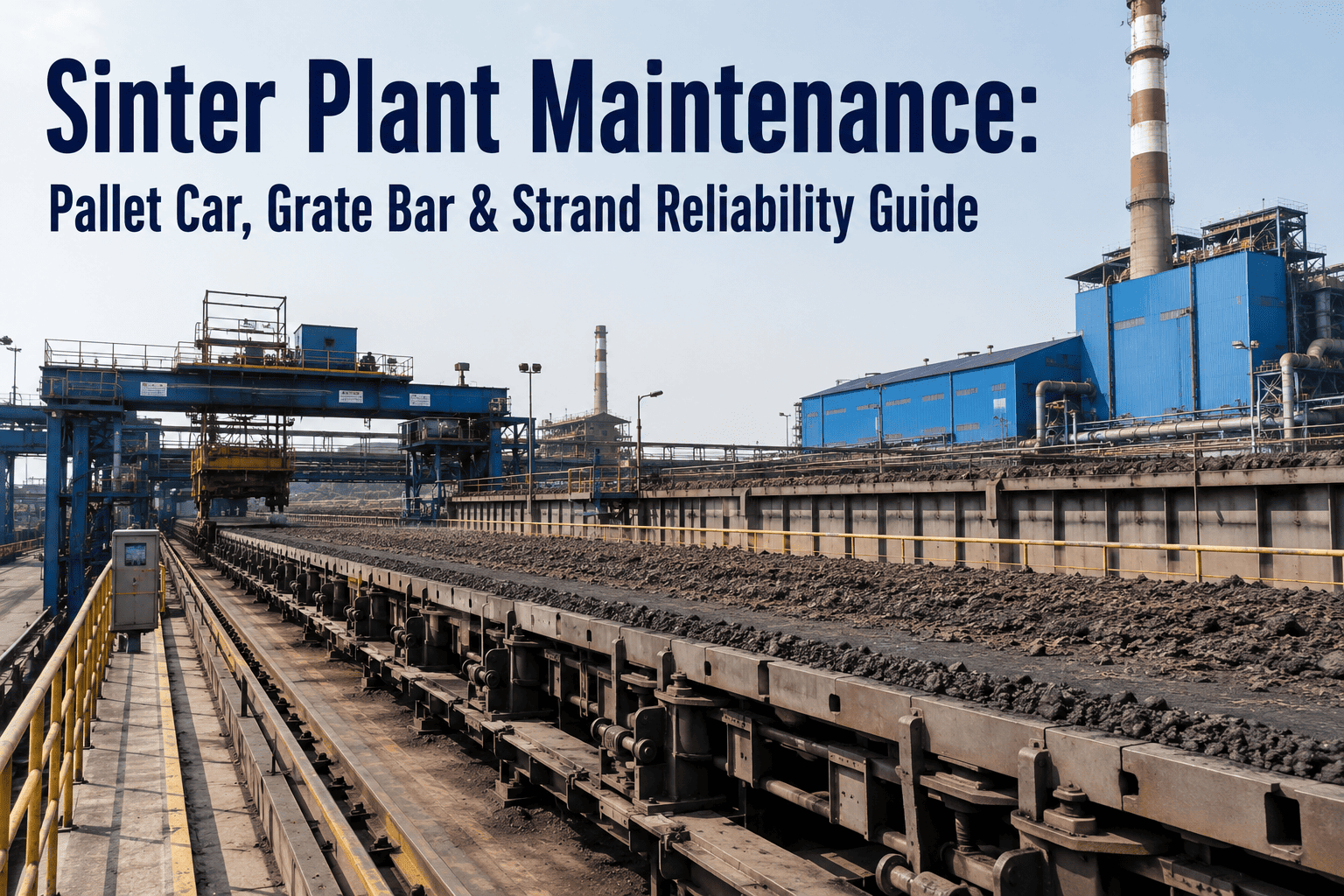
A sinter strand is really a long chain of pallet cars moving continuously through fire, load and vibration, hundreds of times a day, every day. One cracked grate bar, one seized pallet car wheel, or one worn strand chain link does not just stop that car, it drags down the whole strand's output and can take the machine off line entirely. Sign up to see how Oxmaint tracks pallet cars, grate bars and strand drives across your sinter plant in one place.
100+ Cars
Circulate continuously on a typical sinter strand, each one a wear point
1300°C+ Heat
Is what grate bars endure on every pass across the sintering bed
0 Idle Time
Is the goal, since the strand runs as one continuous loop, not batches
1 Weak Link
In the strand chain is enough to force an unplanned full machine stop
Why a Sinter Strand Fails as One Continuous System
One Strand, No Isolated Failures
Unlike a batch process where one bad unit can be pulled aside, a sinter strand is a closed loop of pallet cars linked by a common chain. A pallet car with a seized wheel does not just wear itself out faster, it drags on the drive chain and every car behind it. A cracked or missing grate bar does not just lose sinter mix through the gap, it exposes the pallet car deck plate to direct flame and heat damage. Reliability here means watching the whole loop, not just the machine as a single unit.
The Three Wear Points That Take Down a Strand
Pallet Cars
Wheel bearing wear and deck plate warping from repeated heat cycling cause cars to bind or derail at the turn wheel, disrupting the whole chain of cars behind them.
Grate Bars
Thermal cracking and burn-through from direct exposure to the sintering flame front lead to sinter mix falling through, followed by heat damage spreading to the deck below.
Strand Chain & Drive
Link elongation and sprocket tooth wear under continuous load gradually change chain pitch, and past a certain point the chain skips or jumps the drive sprocket entirely.
Inspection Points Across the Strand
| Asset |
Common Wear or Failure Mode |
Preventive Task |
| Pallet car wheels |
Bearing wear and flat spots from heat and continuous rolling load |
Wheel and bearing condition check at scheduled car rotation |
| Grate bars |
Thermal cracking, warping and burn-through from flame exposure |
Visual inspection and replacement count tracking per car |
| Deck plates |
Heat distortion once grate bars have failed and exposed the plate |
Deck plate flatness and heat damage inspection on rotation |
| Strand chain |
Link elongation and pitch drift under sustained pulling load |
Chain elongation measurement against wear-limit chart |
| Drive sprockets & bearings |
Tooth wear and bearing heat under continuous drive torque |
Sprocket tooth profile and bearing temperature monitoring |
Every Car, Every Bar, One Reliability Record
Oxmaint registers pallet cars, grate bars, deck plates, strand chain and drive sprockets as tracked assets with their own inspection and replacement history, so a strand slowdown can be traced back to the exact car or component that caused it. Sign up for a free trial to see it against your own sinter plant, or book a demo and we will walk through your strand.
Rotation-Based Repairs vs Condition-Based Maintenance
| Approach |
How It Plays Out |
Result on Strand Uptime |
| Reactive repair |
A car derails or the chain jumps the sprocket during operation |
Unplanned full machine stop and lost sinter output |
| Fixed rotation schedule |
Grate bars and wheels replaced at set intervals regardless of actual wear |
Good components pulled early, worn ones sometimes missed |
| Condition-based maintenance |
Chain elongation, bearing temperature and grate bar condition trended per car |
Worn components replaced before they take down the strand |
How Oxmaint Supports Sinter Plant Reliability
Oxmaint tracks every pallet car, grate bar, deck plate, chain link segment and drive sprocket as an individual asset, logging inspection readings and wear trends against each one across the whole strand loop. A chain nearing its elongation limit or a car with a history of repeated grate bar failures triggers a work order early, before it forces an unplanned stop. Book a demo to see it mapped against your own sinter plant.
Frequently Asked Questions
Q
Why is sinter plant maintenance treated as one continuous system rather than separate machines?
Because pallet cars are physically linked in a closed loop by the strand chain, a problem on one car or chain link affects the cars around it and can bring the entire strand to a stop, not just the failed component.
Q
What is the most common cause of grate bar failure on a sinter machine?
Repeated exposure to the sintering flame front causes thermal cracking and warping, and once a bar cracks or burns through, sinter mix falls through the gap and heat begins to damage the deck plate beneath it.
Q
Why does strand chain wear eventually cause a full machine stop?
As chain links elongate under continuous load, the chain pitch drifts away from the sprocket tooth spacing, and once that mismatch passes a certain point the chain can skip or jump the drive sprocket entirely.
Q
How can a sinter plant shift from fixed rotation schedules to condition-based maintenance?
Register each pallet car, grate bar, chain segment and drive component as a tracked asset, then log wear readings against it so replacements are timed to actual condition instead of a fixed calendar interval.
Keep Your Strand Running Without Unplanned Stops
Oxmaint gives steel plant teams pallet car tracking, grate bar replacement logs, chain elongation monitoring and predictive maintenance across the entire sinter strand. Sign up for a free trial to explore it yourself, or book a demo and we will walk through it against your own plant.