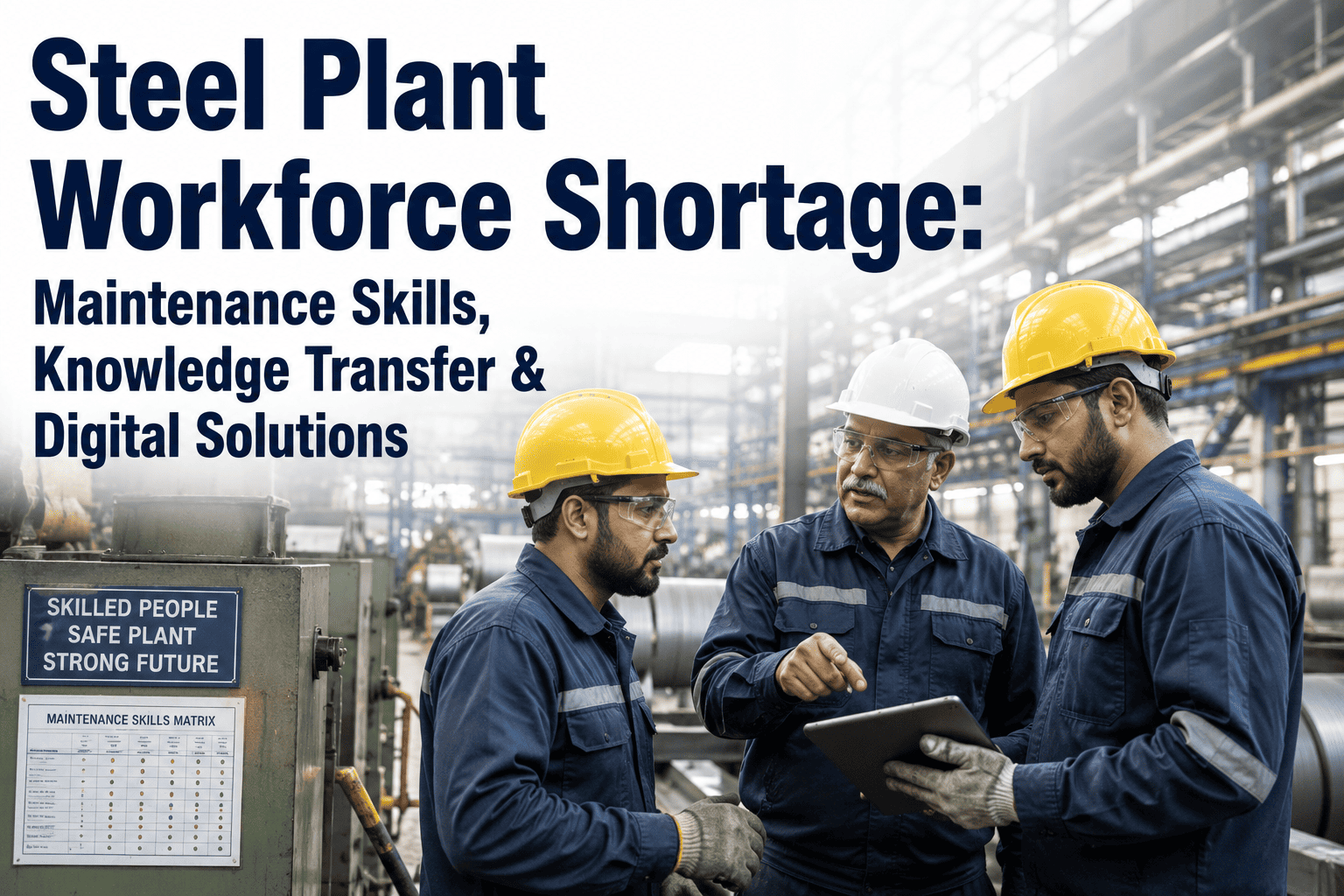
The most experienced technician on a steel plant floor usually isn't the one with the newest certification, he's the one who knows the roll mill "just sounds like that" on a cold start. That knowledge walks out the door on his last day unless someone captured it first. Sign up to see how Oxmaint turns tribal knowledge into digital work instructions before it's gone.
40%+
Of skilled maintenance staff at many plants are within a decade of retirement
2-3 Years
Typical time for a new hire to reach independent troubleshooting on critical assets
30%
Longer average repair time when a junior tech works without a senior on the same fault
Weeks
How long it takes to digitize one asset's core troubleshooting knowledge, not years
Why the Shortage Hits Steel Plants Harder Than Most
Steel plant equipment doesn't come with a generic manual that covers every quirk. A blast furnace, a caster, or a rolling mill develops its own personality after years of wear, repairs, and modifications, and that context usually lives in one person's head. When that person retires faster than a replacement can be trained, the plant isn't just short a body on the roster, it's short the judgment call that used to prevent a four-hour outage.
Tribal Knowledge vs a Digital Knowledge Base
| Where Knowledge Lives |
Tribal Knowledge |
Digital Knowledge Base |
| Troubleshooting steps |
Remembered by one or two senior technicians |
Written into a step-by-step guide tied to the asset record |
| Fault history |
Recalled from memory, often inconsistent between shifts |
Logged automatically every time a work order closes |
| Photos and reference points |
A mental picture of "what normal looks like" |
Attached directly to the checklist step a new hire is following |
| Handover between shifts |
A verbal briefing that thins out with every retelling |
A shared log every technician can search before starting a task |
Capture the Knowledge Before the Retirement Party
Oxmaint lets your senior technicians record step-by-step digital work instructions, photos, and fault history directly against each asset, so a junior hire isn't guessing on their first solo call. Sign up for a free trial to build your first checklist, or book a demo and we'll show you how fast one asset can be documented.
Four Ways Plants Are Actually Closing the Skills Gap
| Approach |
What It Solves |
Where It Falls Short Alone |
| Mentorship pairing |
Hands-on transfer of judgment calls a manual can't capture |
Doesn't scale once the mentor retires or gets pulled elsewhere |
| Digital work instructions |
Consistent step-by-step guidance available to any shift |
Only as good as how thoroughly they were documented |
| AI-assisted troubleshooting |
Surfaces similar past faults and fixes for a new symptom |
Needs a solid fault history logged in the system first |
| Cross-training rotations |
Backup coverage so one absence doesn't stall a whole line |
Slow without a shared knowledge base to train against |
A Junior Technician's First Solo Call, With and Without Digital Support
Without Digital Support
Calls a senior tech over the phone and waits for a callback
Guesses at the fault based on a generic manufacturer manual
Repair takes noticeably longer and risks a repeat visit
With Digital Support
Pulls up the asset's own fault history and past fixes on a tablet
Follows a step-by-step checklist built from senior technician input
Fixes it independently and logs the outcome for the next technician
How Oxmaint Supports Workforce Transitions
Oxmaint gives every asset its own living record, digital work instructions, attached photos, and a searchable fault history that grows every time a work order closes. New hires troubleshoot against real plant history instead of a generic manual, and senior technicians spend less time fielding repeat phone calls. Book a demo to see how quickly your team's knowledge could be captured.
Frequently Asked Questions
Q
How do we capture knowledge from technicians who are close to retiring?
Start with their most critical assets, not everything at once. Sit with them while they walk through a real fault, record the steps and reasoning as a digital work instruction, and attach the photos they'd normally point at in person.
Q
Can digital work instructions actually replace hands-on mentorship?
Not entirely, judgment built over years still matters. But they close most of the gap for routine and semi-routine faults, freeing up senior staff to focus their mentoring time on the genuinely unusual cases.
Q
Does AI-assisted troubleshooting need years of historical data first?
It gets better with more history, but it's useful from the first logged fault onward. Even a few months of consistent work order data lets it start surfacing similar past cases for a new symptom.
Q
Where should a plant start if the workforce gap already feels urgent?
Identify the two or three assets where an outage hurts the most and where the knowledge sits with the fewest people. Document those first, then expand the checklist library asset by asset as time allows.
Don't Let Retirement Take Your Best Troubleshooting Knowledge With It
Oxmaint gives steel plant teams digital work instructions, searchable fault history, AI-assisted troubleshooting, and asset records that outlast any one technician's tenure. Sign up for a free trial to start capturing knowledge today, or book a demo and we'll walk through it against your own critical assets.