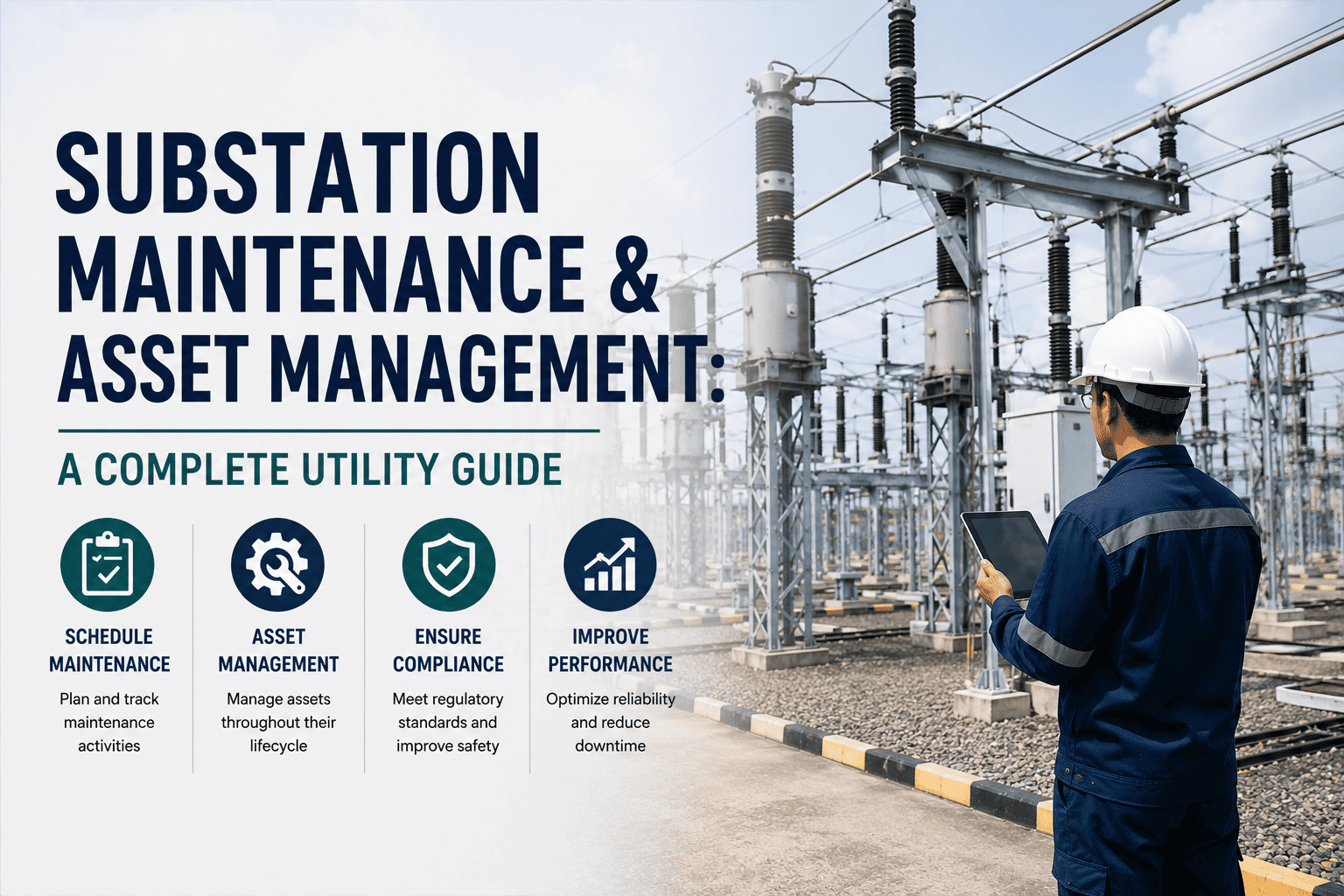
A transformer doesn't fail on the day it's inspected, it fails months after a gas trend nobody was watching crossed a threshold. Substations carry some of the most expensive, longest-lived assets on a distribution network, yet DGA results, switchgear test records and thermographic surveys are still often filed by asset type instead of by asset. A CMMS like OxMaint keeps every diagnostic result against the transformer or breaker it came from, trended over time.
See Every Substation Asset's Condition in One View
Track DGA trends, switchgear tests and thermographic findings against each asset, not a shared spreadsheet.
The Core Substation Maintenance Programme
Transformer DGA & Oil Analysis
Dissolved gas analysis reveals arcing, overheating and partial discharge inside the tank long before a visible fault.
Switchgear Testing
Contact resistance, trip timing and SF6 density readings catch a breaker degrading before a fault-clearing event exposes it.
Thermographic Inspection
Infrared surveys of joints, busbars and cable boxes catch hotspots forming well before insulation is compromised.
Partial Discharge Testing
PD testing on HV switchgear and transformer bushings picks up insulation weaknesses that oil analysis alone can miss.
Protection & Control Testing
Relay and RTU checks confirm the protection scheme will actually trip correctly the moment it's needed.
Civil & Structural Inspection
Corrosion, cable pit condition and compound leaks are unglamorous checks that prevent bigger asset failures later.
Substation Asset Health Indicators at a Glance
| Asset Type | Key Diagnostic | Action Threshold |
|---|---|---|
| Power Transformers | Dissolved gas analysis (acetylene, hydrogen) | Acetylene above 5 ppm flags investigation |
| HV Switchgear | Contact resistance, SF6 density | Drift against IEC 62271 thresholds |
| Cable Boxes & Busbars | Thermographic hotspot detection | 20°C above ambient triggers review |
| Instrument Transformers | Partial discharge testing | Detected PD activity above baseline |
Before, During and After a Substation Outage
Review Condition Data Against Every Asset
Check DGA trends, switchgear test history and thermographic findings to scope the outage around what's actually degrading.
Run Testing Against the Planned Scope
Log contact resistance, PD and insulation results in real time so nothing is left to reconstruct afterwards.
Update the Asset Health Record
New readings feed straight into the next condition assessment, sharpening the outage plan for the following cycle.
Substation Maintenance Maturity
Reactive, Asset by Asset
Test results sit in contractor reports and lab emails, with no trend line connecting one reading to the next.
Calendar-Based Programme
Inspections happen on a fixed schedule, but findings rarely change the interval for the specific asset involved.
Condition-Based Asset Management
DGA, switchgear and thermographic data feed a live health record per asset, driving the next maintenance decision.
Why One Bad Trend Is Worth More Than a Hundred Clean Inspections
A DNO can run a perfect inspection schedule and still lose a transformer, because the finding that mattered was a slow rise in acetylene across three sampling rounds, not any single visit. Condition data only earns its value when it's trended against the same asset over time, not filed as a one-off pass or fail. Engineering teams who catch failures early aren't inspecting more often, they're connecting what each new reading says to everything that came before it. Sign up free to build that record for your own substation fleet, or book a demo to see how DNO teams manage transformer and switchgear condition data at scale.
Catch the Trend Before It Becomes a Fault
Give every transformer and breaker its own condition history, searchable across your whole substation fleet.
Frequently Asked Questions
What is dissolved gas analysis and why does it matter for substation maintenance?
DGA measures gases dissolved in transformer oil that reveal internal faults such as arcing, overheating or partial discharge, often months before those faults would be visible through any other inspection method.
How often should switchgear be tested for contact resistance and SF6 levels?
Intervals vary by switchgear type and duty, but contact resistance and SF6 density are typically checked as part of a planned preventive maintenance programme, with condition trends used to bring forward testing on assets showing early drift.
What is an asset health index and how is it used in the UK?
An asset health index combines inspection findings, diagnostic test results and duty factors into a single condition score per asset, used by UK DNOs under frameworks such as the Common Network Asset Indices Methodology to prioritise investment and replacement.
Can thermographic surveys replace electrical testing at a substation?
No, thermographic surveys catch surface-level hotspots on joints and connections, but they don't detect internal issues like dissolved gases or partial discharge, so both diagnostic methods are needed for a complete picture.
Does digital asset management actually reduce unplanned substation outages?
Trending condition data against each asset, rather than reviewing test results in isolation, is what allows a maintenance team to schedule an intervention before a developing fault causes an unplanned outage.