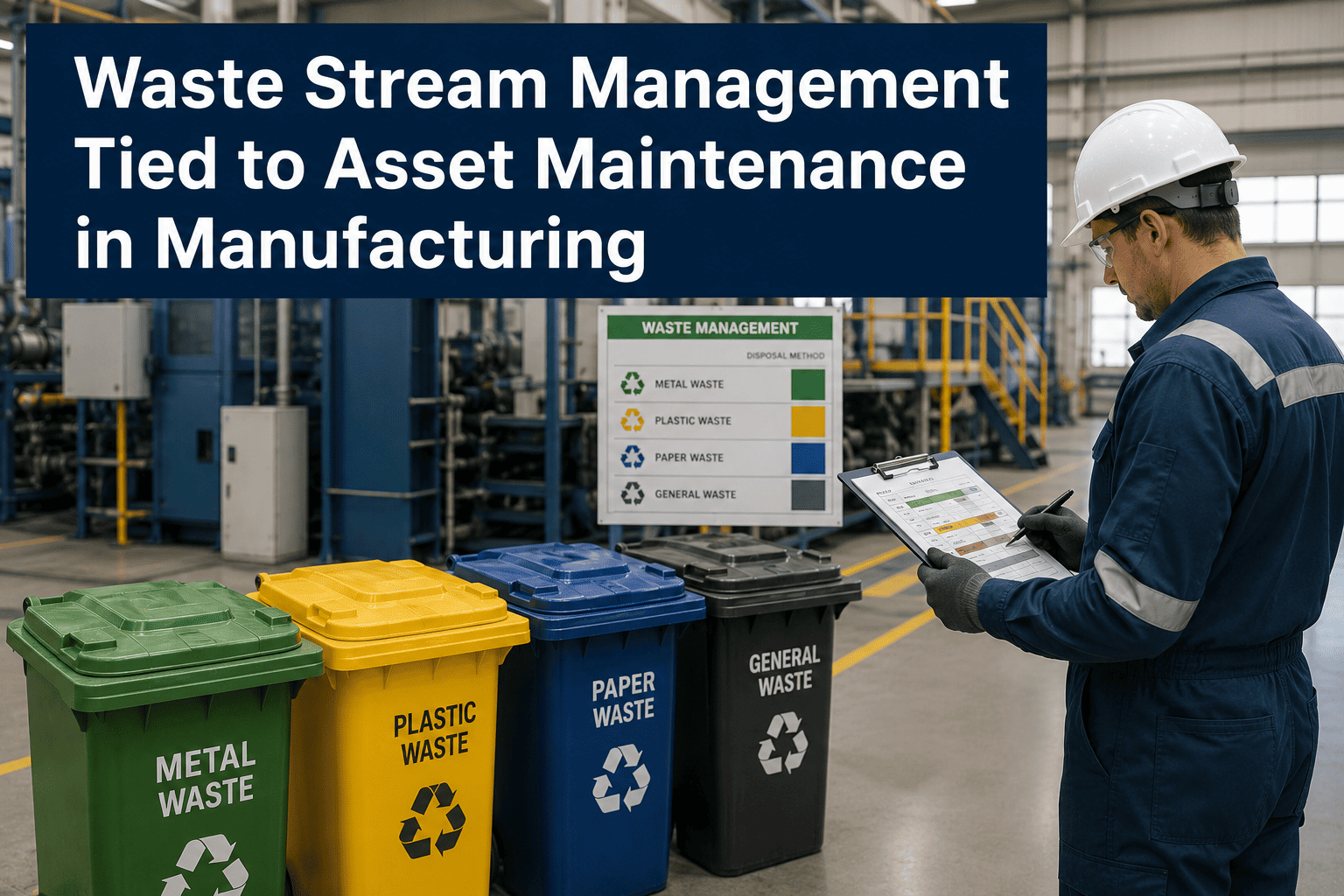
Every oil change, filter swap, and coolant top-up closes a work order and opens a waste duty of care obligation nobody assigned to anyone. The technician who drained the gearbox knows exactly what came out of it, but that knowledge rarely survives the walk to the skip. Used oil, spent filters, contaminated rags, and packaging from spare parts are all waste streams with their own classification and paperwork under UK law, and most of it originates from maintenance work, not a dedicated waste team. A CMMS like OxMaint captures the waste generated at the point the work order is closed, so the paper trail starts where the waste actually does.
Track Waste From the Work Order That Created It
Used oil, filters, coolant, and packaging logged at the point of maintenance, mapped to the right classification and paperwork.
Waste That Comes Out of Every Work Order
Most maintenance-generated waste falls into a handful of recurring categories, each with its own handling and documentation requirement.
Used Oil & Coolant
Classified as hazardous waste, requiring a consignment note and a licensed carrier for every collection.
Spent Filters
Oil and fuel filters are typically hazardous waste too, carrying residual contamination even after draining.
Contaminated Materials
Rags, absorbents, and PPE used during repairs often need hazardous waste handling, not the general skip.
Packaging & Scrap
Spare parts packaging and scrap metal are non-hazardous but still need a waste transfer note per movement.
Matching Waste Streams to Their Paperwork
| Waste Type | Classification | Required Document |
|---|---|---|
| Used oil, coolant, filters | Hazardous | Hazardous waste consignment note |
| Contaminated rags & absorbents | Hazardous | Consignment note, EWC code |
| Scrap metal & packaging | Non-hazardous | Waste transfer note |
| Packaging under producer duty | Regulated | PRN / PERN evidence |
Where Waste Duty of Care Breaks Down
Wrong Skip, Wrong Waste
Hazardous items end up in general waste because the technician wasn't sure which category applied.
Missing Consignment Notes
A collection happens, but the paperwork trailing it never gets matched back to the original work order.
No Volume Tracking
Nobody records how much waste a given asset or job generates, so trends and reduction opportunities go unseen.
Unlicensed Carriers
Waste gets collected by whoever is available, without checking the carrier holds a valid waste licence.
Waste Tracking Maturity
Untracked at Source
Waste is generated during maintenance but not logged until it reaches a skip or collection point, if at all.
Logged But Disconnected
Consignment notes and transfer notes are filed correctly, but not linked back to the maintenance work that created them.
Traced From Work Order
Every waste item is tied to the work order and asset that produced it, from generation through to disposal.
The Numbers Behind Maintenance Waste
Waste duty of care doesn't end at the skip — it follows the waste all the way to its final destination, and the paper trail needs to keep up. Sign up free to start logging waste from the work order that created it, or book a demo to see the full trail in action.
Never Lose a Waste Trail Between Work Order and Disposal
Hazardous and non-hazardous waste logged, classified, and linked to consignment or transfer notes automatically.
Building the Waste Trail Into Maintenance
Flag Waste at Work Order Close
Add a waste field to PM and repair tasks, so what's generated is logged the moment the job is finished.
Classify by Type
Match each waste item to its List of Wastes code and hazardous or non-hazardous status automatically.
Link the Paperwork
Attach the consignment or transfer note to the same record, closing the loop between creation and disposal.
Review Volume Trends
Use the accumulated data to spot which assets or jobs generate the most waste and where reduction is possible.
Frequently Asked Questions
What counts as hazardous waste from maintenance work?
Used oil, coolant, spent filters, and contaminated rags or absorbents are commonly classified as hazardous waste and require a consignment note and licensed carrier.
What is waste duty of care?
It's the legal obligation under UK law for anyone who produces, holds, or transports waste to ensure it's handled safely and passed only to an authorised person, right through to final disposal.
What's the difference between a waste transfer note and a consignment note?
A waste transfer note covers non-hazardous waste movements, while a hazardous waste consignment note is required specifically for hazardous waste and includes more detailed tracking information.
What are PRNs and PERNs?
Packaging Recovery Notes and Packaging Export Recovery Notes are evidence used under UK producer responsibility rules to show that packaging waste has been recycled or recovered.
Can maintenance software actually track waste, not just work orders?
Yes, when a waste field is built into the work order itself, the same system that schedules and closes maintenance tasks can also log, classify, and document the waste each one generates.