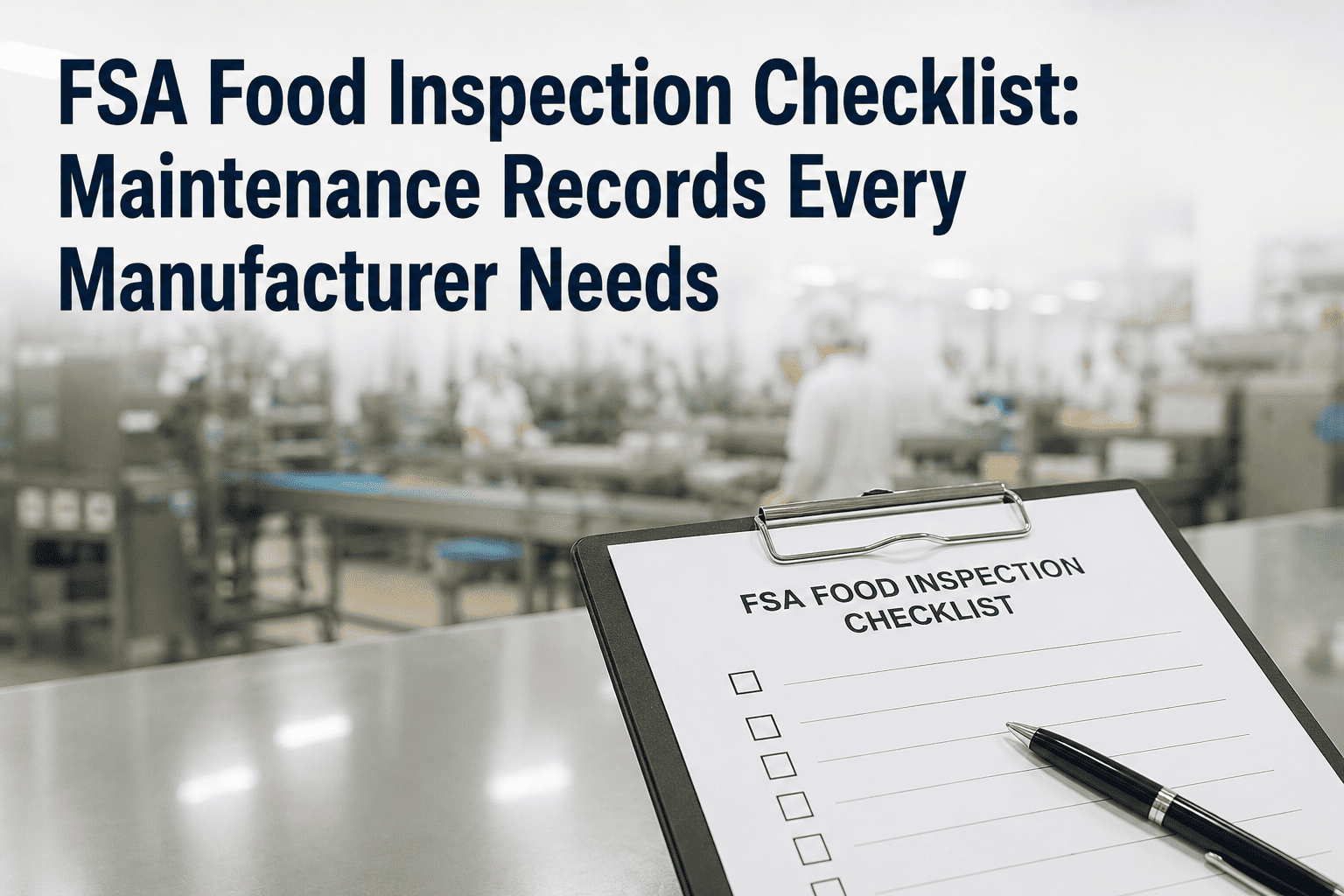
An FSA inspector doesn't just look at what's on the production line, they look at what's on paper behind it. Calibration certificates, PPM schedules, cleaning logs and corrective action records are what turn a good facility into an audit-ready one. Most food manufacturers have these records, the problem is they're scattered across contractor emails, filing cabinets and three different spreadsheets. A CMMS like OxMaint keeps every maintenance record in one place, ready the moment an inspector asks for it.
Walk Into Your Next Audit Fully Prepared
Keep calibration certificates, PPM schedules and cleaning logs organised and instantly searchable in one system.
The Six Maintenance Records Every FSA Audit Asks For
PPM Schedules
Proof that equipment servicing happens on a set cycle, not only after something breaks.
Calibration Certificates
Thermometers, probes and monitoring sensors need dated, traceable calibration records.
Cleaning & Sanitation Logs
Signed records showing cleaning schedules were followed, not just written down once.
Pest Control Records
Inspection dates, findings and treatment actions from your pest control contractor.
Equipment Service History
A full trail of repairs and parts replaced for every piece of production equipment.
Corrective Action Logs
Evidence that when something failed, it was fixed and the fix was verified afterwards.
How Long These Records Actually Need to Be Kept
| Record Type | Typical Retention | Usually Requested By |
|---|---|---|
| PPM & Service History | 3 to 5 years | FSA inspectors, insurance auditors |
| Calibration Certificates | Life of the instrument | FSA inspectors, HACCP audits |
| Cleaning & Sanitation Logs | 1 to 2 years | Environmental health officers |
| Corrective Action Logs | 3 years minimum | FSA inspectors, customer audits |
Before, During and After an FSA Visit
Pull the Full Record Set
Gather PPM history, calibration certificates and logs for every asset the inspector may ask about.
Answer Questions in Real Time
Search for any record on the spot instead of promising to send it over after the visit.
Close Out Any Findings
Log corrective actions against the exact asset flagged so the next audit shows it was resolved.
Maintenance Record Maturity
Paper Files and Memory
Records exist somewhere on site but finding the right one during a visit takes hours, not minutes.
Scattered Digital Files
Spreadsheets and emailed PDFs cover most records but nothing links back to the actual asset.
One Searchable System
Every certificate, log and service record is attached to its asset and searchable in seconds.
Why Missing Paperwork Is Worse Than a Missed Repair
Inspectors rarely fail a site over one broken part, they flag sites where the paperwork can't prove maintenance happened at all. A well-serviced machine with no record trail looks identical to a neglected one on audit day. Tech managers who stay ahead aren't chasing paperwork the week before a visit, they're pulling it from a system that's already organised. Sign up free to get every maintenance record audit-ready, or book a demo to see how food manufacturers prepare for FSA visits without the scramble.
Never Scramble for Records Again
Attach every certificate, log and service record to its asset so audit day is just a search away.
Frequently Asked Questions
What maintenance records does an FSA inspector usually ask to see first?
Inspectors typically start with PPM schedules and calibration certificates for temperature and monitoring equipment before moving to cleaning and pest control logs.
How long should calibration certificates be kept on file?
Calibration records are generally kept for the working life of the instrument, since an auditor may ask to trace accuracy back to when a piece of equipment was first installed.
Can digital maintenance records replace paper logbooks for an audit?
Yes, most FSA inspectors accept digital records as long as they are dated, traceable to a specific asset and can be produced on request during the visit.
What happens if a corrective action from a previous audit isn't documented?
An undocumented corrective action often gets treated as an unresolved issue, which can escalate a minor finding into a repeat non-compliance on the next visit.
Does a CMMS help tech managers prepare for food safety audits?
A CMMS attaches service history, certificates and corrective actions directly to each asset, so a tech manager can pull a complete record set in minutes rather than days.