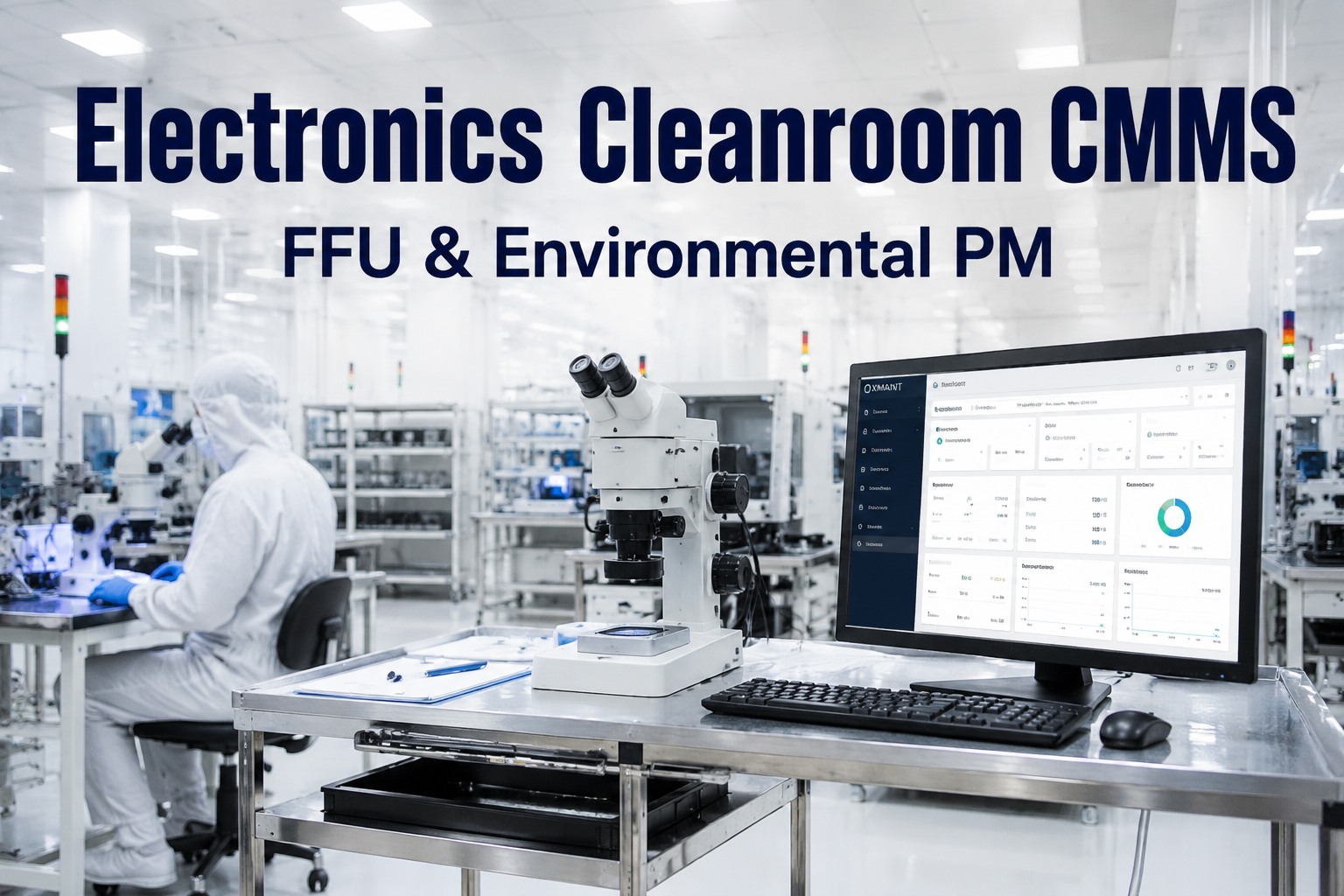
BRCGS Issue 9 doesn't treat maintenance as a background task, it treats it as a formally audited food safety control. Clause 4.7 expects a documented, planned maintenance programme covering every piece of plant, processing equipment and mobile equipment on site, with evidence that work was actually completed, not just scheduled. Most facilities don't lose their grade on the factory floor, they lose it in the paperwork when an auditor asks for twelve months of records and finds gaps. A CMMS like OxMaint turns every completed task into a timestamped, audit-ready record.
Turn Every PM Task Into Audit-Ready Evidence
Timestamped work orders, calibration records and closed-loop corrective actions mapped directly to BRCGS Issue 9 Clause 4.7.
Clause 4.7 in Plain English
Section 4.7 of BRCGS Issue 9 is short but heavily weighted at audit. It isn't checking whether a maintenance department exists, it's checking whether the programme is systematic, documented and consistently followed on an ordinary Tuesday, not just the week before an audit.
| Requirement | What Auditors Check | Why It Matters |
|---|---|---|
| Planned maintenance programme | A documented PM schedule covering every plant and processing asset | Missing schedule generates an automatic Critical non-conformance |
| Completion evidence | Closed work orders with technician sign-off and timestamps | A "scheduled" task without proof of completion isn't evidence |
| Corrective actions | Root cause analysis linked to every maintenance non-conformance | Repeat findings on the same asset signal a systemic failure |
What Falls Under Your PM Programme
Production Equipment
Anything that wears, needs lubricant or can shed foreign material belongs on a scheduled PM.
Building Fabric
Walls, floors, ceilings and drains need condition checks tied to contamination risk, not just repairs.
Utilities & Services
Compressed air, water and refrigeration systems carry hygiene risk if maintenance slips.
Monitoring Instruments
Temperature probes, checkweighers and metal detectors need traceable, in-date calibration.
From Reactive Fixes to Audit-Ready Evidence
Schedule Every Critical Asset
Put every asset that could affect product safety, legality or quality onto a defined PM schedule.
Record Completion, Not Intent
Close each work order with a technician sign-off, timestamp and parts used, not a plan on paper.
Close the Loop on CAPA
Link every non-conformance to a root cause and a preventive action, not just an immediate fix.
Sign Off Before Restart
Confirm hygiene checks are complete on food contact equipment before production resumes.
BRCGS Maintenance Maturity
Reactive and Paper-Based
Repairs happen when something breaks, and evidence lives in a logbook nobody can retrieve quickly.
Scheduled but Disconnected
PM tasks are planned in a spreadsheet, but completion and calibration records sit in separate systems.
Grade AA Ready
Every PM, calibration and corrective action is logged and closed automatically, retrievable in seconds.
Why Documentation Decides the Grade
A Grade AA outcome needs near-zero critical and major non-conformances across a full unannounced audit cycle, and that's rarely a question of whether the maintenance work was done well. It's a question of whether the record can prove it. A single missing PM record, an overdue calibration, or an untracked corrective action is often enough to move a site from Grade A to Grade B overnight. Sign up free to build BRCGS-aligned maintenance records from day one, or book a demo to review your current audit exposure with the team.
Protect Your Grade Before the Next Audit
Structured PM, calibration tracking and closed-loop CAPA records built for BRCGS Issue 9 Clause 4.7 compliance.
Frequently Asked Questions
Which BRCGS clause covers maintenance?
Maintenance and hygiene sit primarily under Clause 4.7, though related requirements for equipment, calibration and corrective actions span several other clauses across Section 4.
How long must maintenance records be kept?
Records should be retained for a period consistent with the shelf life of the products produced, or a minimum of one year, whichever is longer.
Does a spreadsheet count as evidence for an auditor?
A spreadsheet showing a task was scheduled is not sufficient on its own, auditors expect closed work orders with sign-off, timestamps and details of what was actually done.
What equipment needs to be on the PM schedule?
Any equipment that could affect product safety, legality or quality should be included, covering production machinery, building fabric, utilities and monitoring instruments alike.
What happens if a corrective action isn't properly closed?
Repeat findings on the same equipment without a documented root cause and preventive action are treated by auditors as evidence of a systemic CAPA programme failure.